Can Cold Weather Damage a Mini Excavator Engine?
An owner-operator wraps up a landscaping job on the last warm afternoon of the season and parks his mini excavator in an unheated yard, thinking little of the forecast. Two weeks later a hard freeze settles overnight, and when he tries to start the machine for an early morning dig, the engine cranks weakly and refuses to fire. He keeps grinding the starter until the battery gives out, then pours boiling water over the block hoping to thaw something loose. By the time a technician arrives, the diagnosis is grim: cracked block, a split hose, and coolant that had frozen solid because it was never mixed for winter. A job he’d promised for that day slips a week, and a repair that a few dollars of antifreeze and a block heater would have prevented lands squarely on his margin. The machine was sound. The cold-weather care behind it was not.
Cold weather doesn’t damage a compact excavator engine out of nowhere. It exposes the small preparations an owner skipped, turning thin fluids, weak batteries, and unprotected coolant into cracked blocks and stalled shifts. The encouraging part is that nearly every cold-weather failure is preventable once you understand what the cold does and how to guard against it. This post walks you through exactly how freezing temperatures threaten your engine and what to do about it: the direct damage cold inflicts on the engine and its fluids, the starting and warm-up habits that protect or punish it, the maintenance that readies a machine for winter, and the operating and storage practices that keep it running through the season.
How Cold Weather Damages the Engine and Its Fluids
Before you can protect a mini excavator, you need to understand what the cold actually attacks. Freezing temperatures work on the engine, the coolant, and the oil in ways that turn routine operation into wear or outright failure. Knowing these mechanisms is the foundation of every winter precaution that follows.
Frozen Coolant and Cracked Components
The most severe cold-weather damage comes from coolant that freezes. Water expands as it turns to ice, and a cooling system filled with plain water or a weak antifreeze mix can split a radiator, burst a hose, or crack the engine block itself. A cracked block is often a machine-ending repair, and it happens silently overnight.
Prevention comes down to the right mixture. Confirming your engine coolant freeze point protects the block down to the lowest temperature you’ll face, and a proper antifreeze-to-water ratio keeps the coolant liquid through the coldest nights. Never run straight water in freezing conditions, since that single shortcut risks the most expensive damage a cold snap can cause.
Thickened Oil and Poor Lubrication
Cold thickens engine oil, and thick oil struggles to flow where it’s needed at startup. When you fire a cold engine, oil that has turned sluggish takes longer to reach the bearings, cylinder walls, and moving parts, leaving them briefly running with too little lubrication. That dry moment causes real wear over a winter of cold starts.
Match the oil to the season. A lower-viscosity winter-grade oil flows faster in the cold and reaches critical parts sooner, cutting startup wear sharply. Checking your machine’s recommended cold-weather oil grade and switching before winter is a small step that spares the engine a season of avoidable stress.
Battery Drain and Weak Starting Power
Cold is hard on batteries, and a weak battery is one of the most common winter no-starts. Low temperatures slow the chemical reaction inside a battery, so it delivers less cranking power exactly when a cold, stiff engine demands more. A battery that started fine in fall can fail on the first hard freeze.
Test the battery before winter arrives. A load test reveals whether the pack still holds strong cranking power or whether the cold will expose it, and clean, tight terminals ensure every bit of that power reaches the starter. Replacing a marginal battery before the season beats getting stranded on a frozen morning.
Takeaway:: frozen coolant, thickened oil, and drained batteries are the three ways cold directly damages a mini excavator engine, so understanding each threat is the first step toward preventing it.
Starting and Warm-Up Habits That Protect the Engine
How you start and warm a mini excavator in the cold decides whether it survives the season cleanly or wears prematurely. Good habits ease the machine through its most vulnerable moments, while rushed ones inflict damage every morning. These practices cost nothing but a little patience.
Use Glow Plugs and Starting Aids Correctly
A diesel mini excavator relies on glow plugs to heat the combustion chamber for cold starts, and using them properly makes the difference between a clean start and a fight. Let the glow plugs cycle fully before cranking, and repeat the cycle if the first attempt doesn’t catch, rather than grinding the starter.
Learn what your machine offers and use it right. Following solid mini excavator cold weather starting tips means giving the glow plugs their full pre-heat time and avoiding ether or spray starting aids unless the manufacturer specifically approves them, since those can damage a glow-plug engine. Patience at startup protects both the engine and the battery.
Let the Engine Warm Before Working
A cold engine needs time to warm before it takes on load. Firing up and immediately swinging a full bucket forces thickened oil and cold hydraulics to work hard before they’re ready, stressing components across the machine. A few minutes of gentle idle lets the oil circulate and the temperature climbs into a safe range.
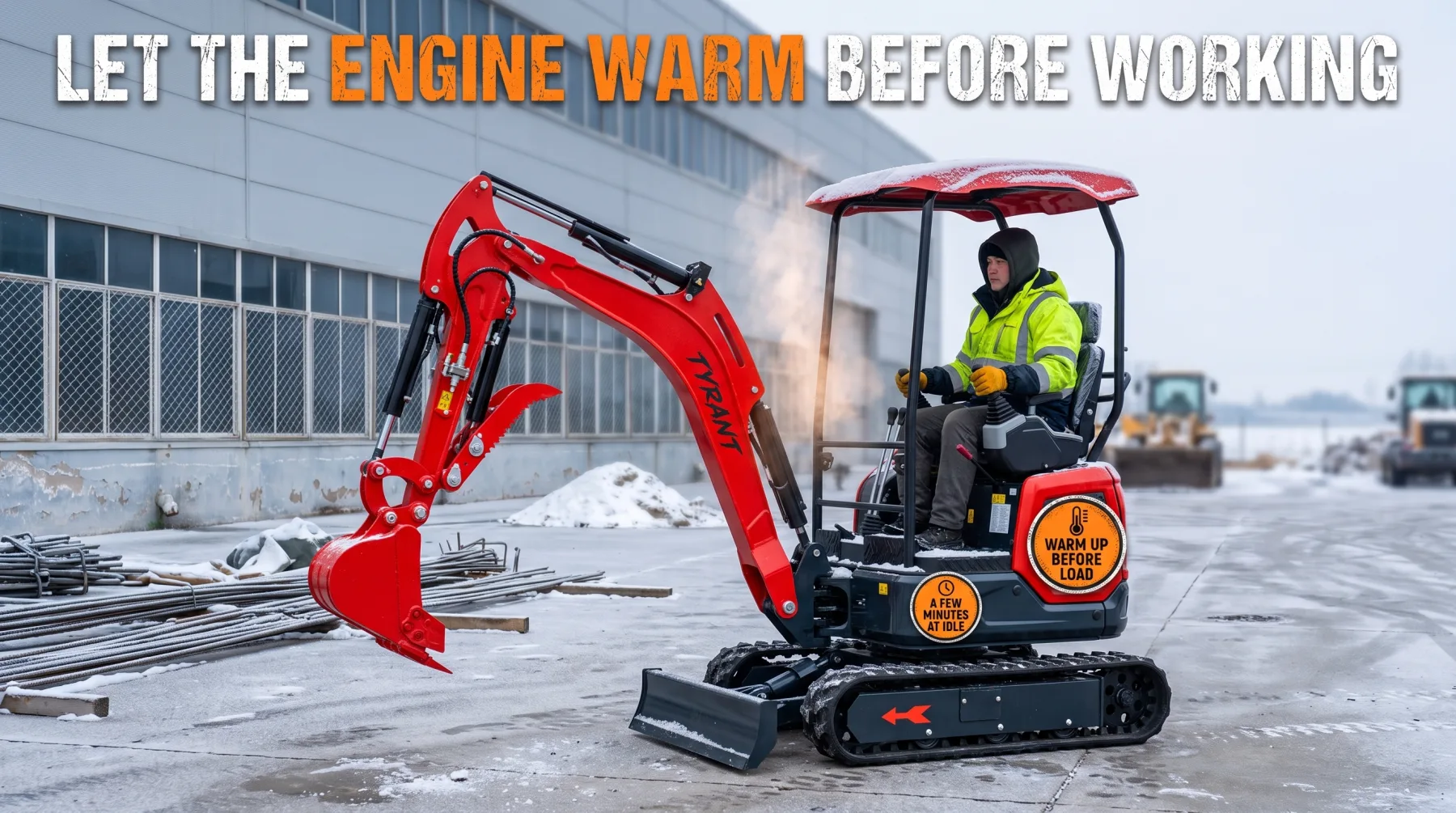
Don’t rush the first dig. Allow the engine to reach operating temperature and cycle the hydraulic functions gently to warm the fluid before demanding real work. This short warm-up routine spares the engine, the pump, and the hydraulic system the wear that comes from running cold under load.
Avoid Prolonged Cranking and Cold Overload
When a cold engine hesitates, the instinct to keep cranking does more harm than good. Extended cranking drains an already weak battery, floods or overworks the starter, and rarely fixes the underlying cold-start problem. Crank in short bursts with rest between them, and solve the cause instead of forcing the symptom.
The same restraint applies once running. Loading the machine hard before it warms strains a cold engine and cold hydraulics together, so ease into the workload as temperatures rise.
Takeaway:: cycling glow plugs properly, warming the engine before working, and avoiding prolonged cranking or cold overload guide the machine through its most fragile moments, so patient starting habits protect the engine every winter morning.
Winter Maintenance That Readies the Machine
Much of cold-weather protection happens before the temperature drops, through maintenance that prepares the machine for the season ahead. A mini excavator readied for winter shrugs off cold that would cripple a neglected one. These are the checks worth completing before the first freeze.
Care for the Fuel System
Diesel fuel behaves differently in the cold, and untreated fuel can gel as wax crystals form and clog the filter, stalling the engine. Using a proper winter-blend diesel or an anti-gel additive keeps fuel flowing freely through the coldest conditions, so the machine draws clean fuel on demand.
Guard against water, too. Condensation in the tank can freeze in fuel lines and filters, so keeping the tank topped off reduces the air space where moisture forms, and draining any water separator prevents ice from blocking the flow. A little fuel-system attention prevents a frustrating and common winter no-start.
Prepare the Battery and Electrical System
The electrical system deserves close attention before winter. Test the battery’s condition and charge, clean and tighten the terminals, and replace a pack that shows weakness, since cold will only expose it further. A strong, fully charged battery is your best insurance against a frozen morning no-start.
Install a cold-start aid if your climate demands it. A block heater warms the engine and its oil overnight so it starts easily and with far less wear, and a battery warmer or trickle charger keeps cranking power strong. Fitting these before the season means the machine is ready the first time the temperature plunges.
Takeaway:: servicing the coolant and fluids, treating the fuel system, and preparing the battery and electrical system ready a mini excavator for the cold, so winter maintenance completed before the freeze prevents the failures that catch unprepared owners.
Operating and Storage Practices for the Cold Season

Beyond starting and maintenance, how you run and store a mini excavator through winter shapes its long-term health. Smart daily habits and proper storage protect the engine across the whole season rather than one cold morning. These practices keep the machine dependable until spring.
Operate Gently in Freezing Conditions
Cold operation calls for a lighter touch throughout the shift, not just at startup. Ease into the workload as the machine warms, avoid slamming hydraulic functions to their limits while fluids are still cold, and let the engine reach full operating temperature before demanding heavy digging. Gentle early operation spares cold, stiff components.
Watch the gauges as you work. Keep an eye on the temperature and warning lights, listen for anything unusual, and let the machine settle into a steady rhythm before pushing it. A mini excavator worked thoughtfully in the cold wears far less than one driven hard the moment it fires up.
Protect the Machine Between Shifts
What you do at the end of a cold day matters as much as the start. Parking the machine under cover or indoors shields it from snow, ice, and the deepest overnight cold, so it starts more easily and faces less freezing stress. Even a simple shelter makes a noticeable difference.
Clear away snow, ice, and mud before they freeze onto the machine, since frozen buildup can jam tracks, controls, and moving parts by morning. Plugging in a block heater overnight or on a timer before the shift readies the engine for an easy start, so the machine is warm and willing when the crew arrives.
Store the Machine Correctly for Long Idle Periods
For stretches when the machine sits unused through winter, proper storage prevents cold-weather damage while it’s parked. Confirm the coolant and fuel are treated for the season, top off the fuel tank to limit condensation, and store the machine on a firm, dry surface out of standing water that could freeze around it.
Tend the battery during long idle spells, too. A battery left in a cold machine slowly drains and can freeze when discharged, so keeping it on a maintainer or removing it to a warmer space preserves both its charge and its life. A machine stored with these steps is ready to work when the season turns rather than needing repairs.
Takeaway:: operating gently in the cold, protecting the machine between shifts, and storing it correctly through long idle periods safeguard the engine all winter, so season-long habits keep a mini excavator dependable until the thaw.
Frequently Asked Questions
Why won’t my mini excavator start in cold weather?
Cold no-starts usually come from several causes at once. A weak battery loses cranking power in the cold, glow plugs may not be cycling fully, thickened oil resists turning the engine, and gelled diesel can clog the filter. Test the battery, let the glow plugs pre-heat fully, switch to winter-grade oil and treated fuel, and consider fitting a block heater.
Why won’t my mini excavator start in cold weather?
Cold no-starts usually trace to a few causes working together. A weak battery delivers less cranking power in the cold just as a stiff engine needs more, glow plugs may not be getting their full pre-heat time, thickened oil resists cranking, and gelled diesel fuel can clog the filter. Test and charge the battery, let the glow plugs cycle fully, use a winter-grade oil and treated fuel, and consider a block heater to warm the engine before starting.
Do I need to change the oil for winter in a mini excavator?
It’s strongly recommended in cold climates. Engine oil thickens as temperatures drop, and thick oil is slow to reach the bearings and moving parts at startup, causing wear during those first cold seconds. Switching to a lower-viscosity winter-grade oil, as specified for your machine, lets the oil flow faster and protect the engine sooner. Remember that hydraulic oil thickens too, so confirm it suits cold operation as well.
Conclusion
Cold weather absolutely can damage a mini excavator engine, but only when the small preparations that guard against it get skipped, since freezing temperatures crack blocks and burst hoses through unprotected coolant, wear engines through thickened oil at startup, drain weak batteries into no-starts, and gel untreated diesel until the machine won’t run, so the reliable way to protect your equipment is to understand each of those threats and stay ahead of them by mixing coolant to the right freeze point, switching to winter-grade engine and hydraulic fluids, treating the fuel and keeping the tank topped off, testing and charging the battery, and fitting a block heater before the first hard freeze, then carrying that care into how you run the machine by cycling the glow plugs properly, warming the engine before working it, easing into the load as it heats, and avoiding the prolonged cranking that strains a cold engine, and finally protecting it between shifts and through long idle spells by storing it under cover, clearing snow and ice, and tending the battery, because every one of these steps is cheap and simple next to a cracked block or a stalled shift, and getting them right keeps your machine starting strong and digging dependably straight through the coldest part of the season; when you are ready to prepare your machine for winter with dependable parts, fluids, or the service support to keep it running in the cold, reach out to a trusted equipment specialist who can pair reliable equipment with the results your projects depend on.