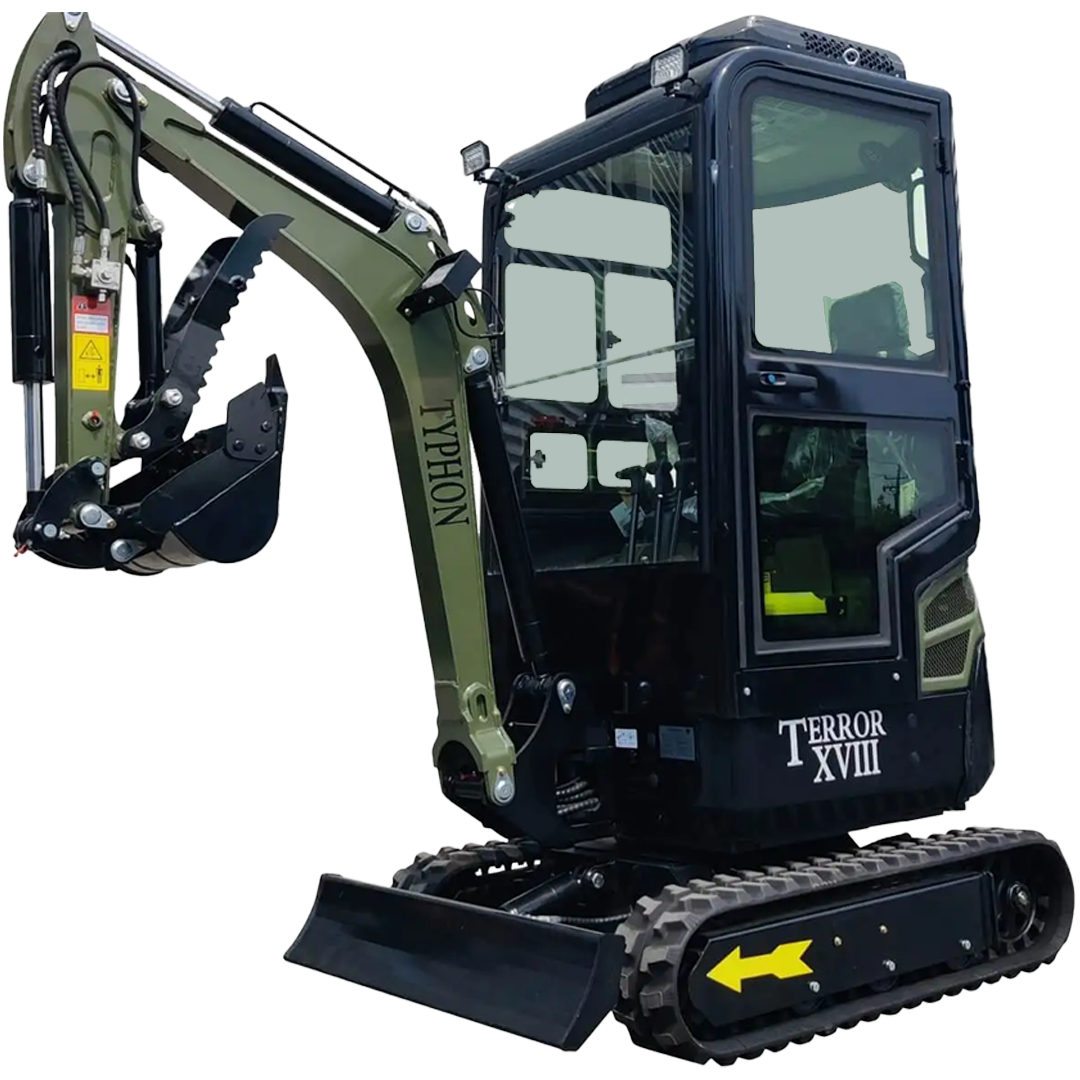
Starting At
$12,999
TYPHON TERROR XVIII PRESTIGE
2-Ton Class | Kubota D902 Diesel | A/C & Heater Cabin | 380mm Bucket
Body Finish
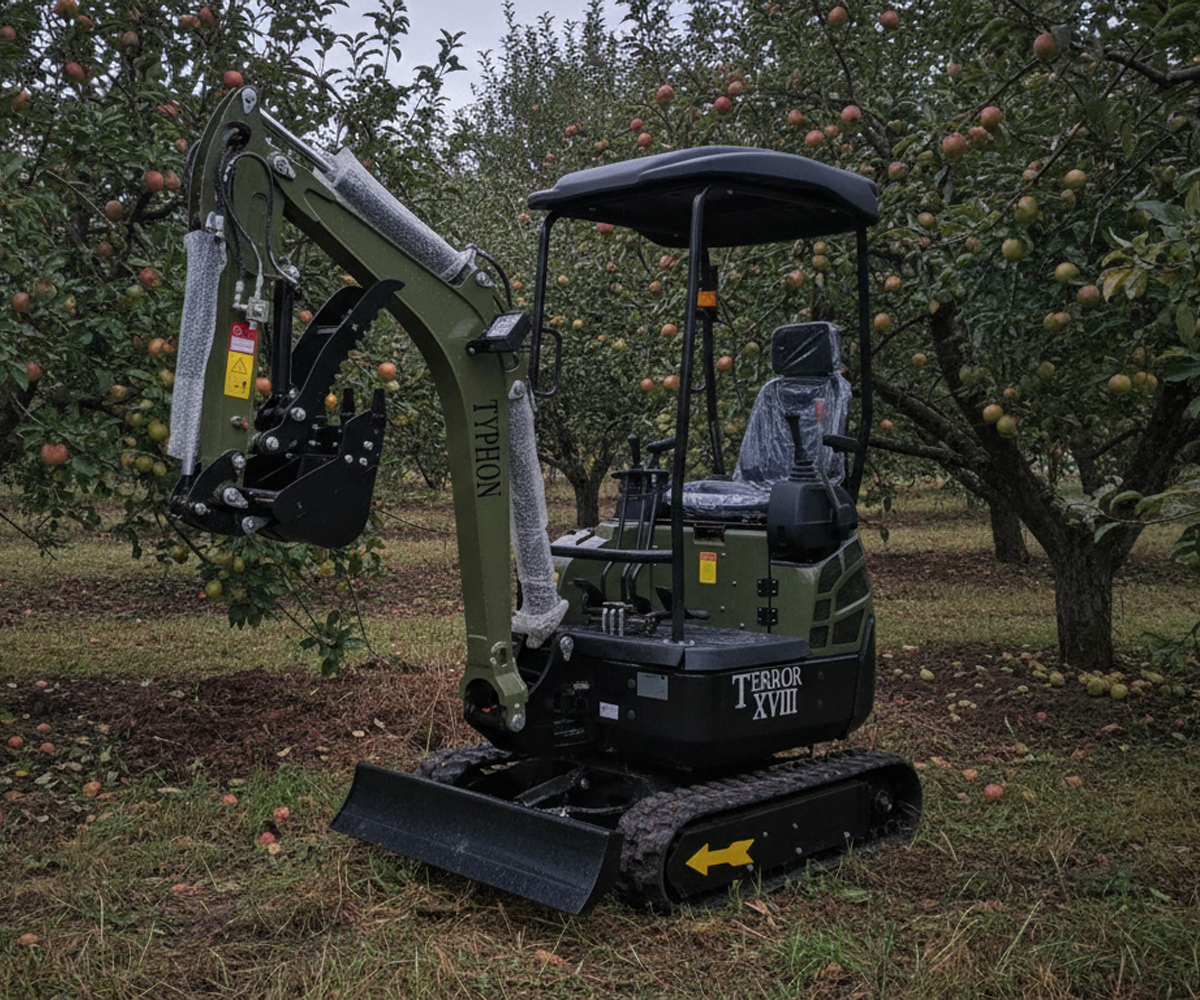
Green
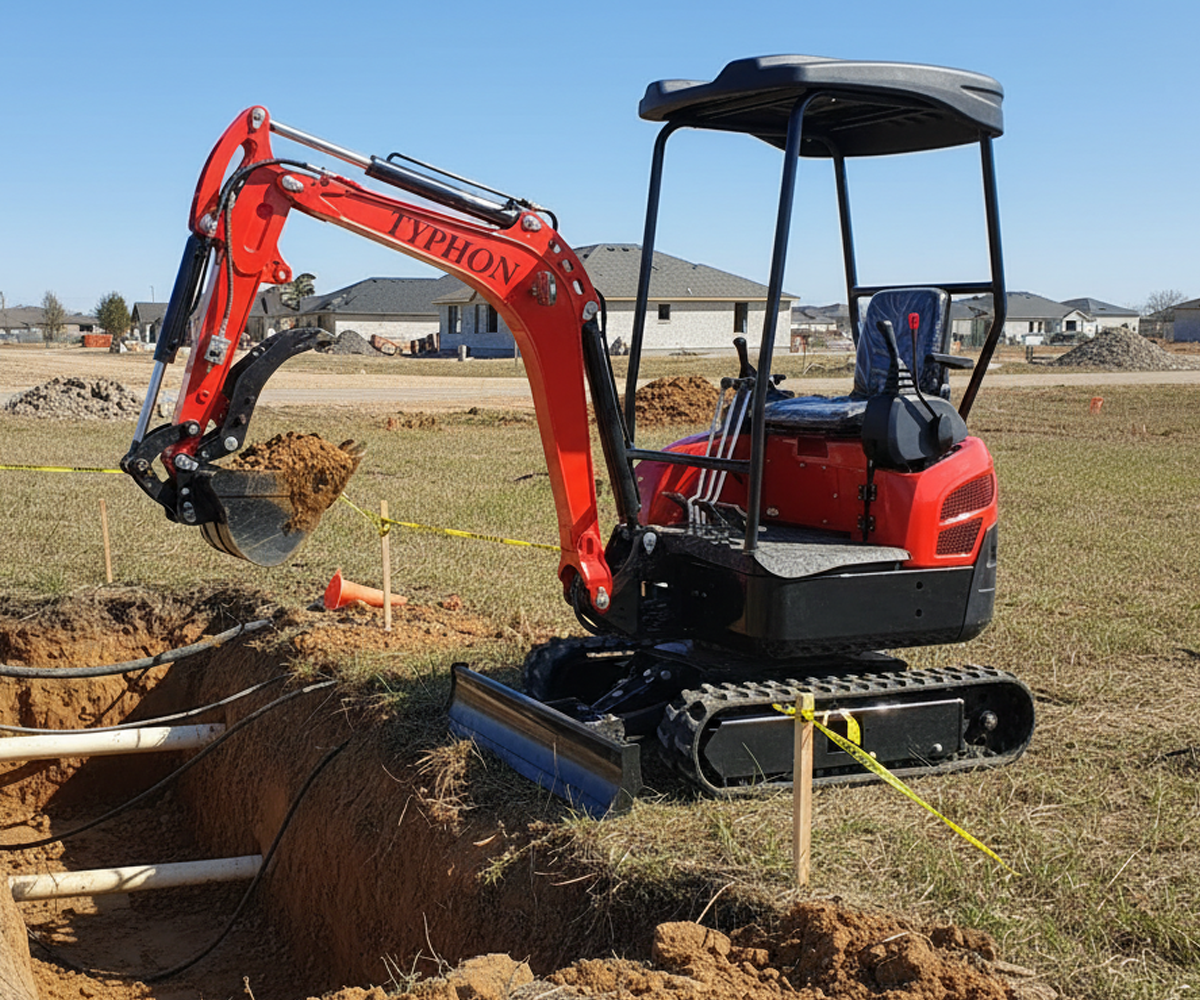
Red
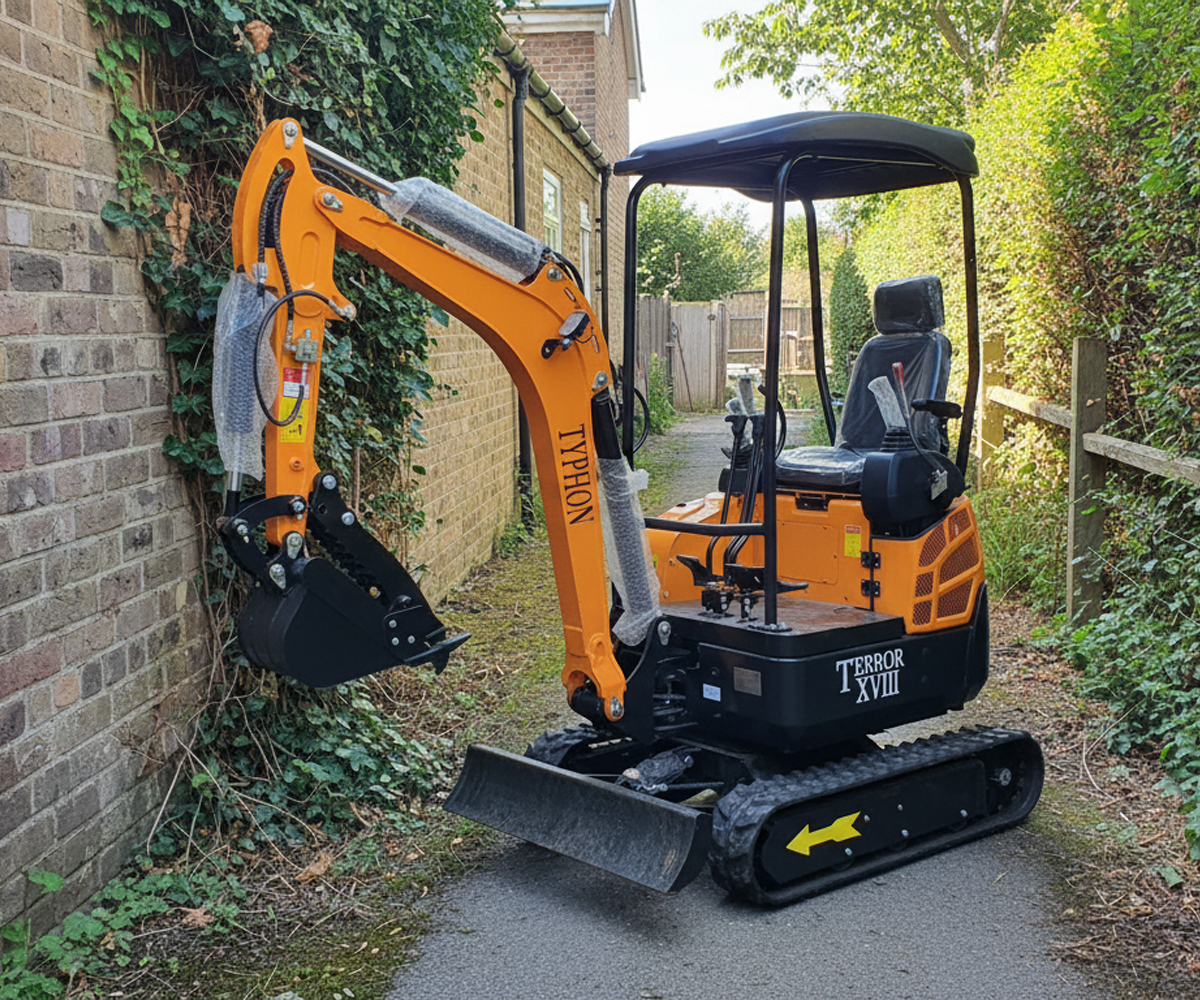
Yellow
SKU: TYPH-1802G
2060mm
2 Ton
A/C
1711mm

The ultimate compact excavator. Configure yours below.
2-Ton Class | Kubota D902 Diesel | A/C & Heater Cabin | 380mm Bucket
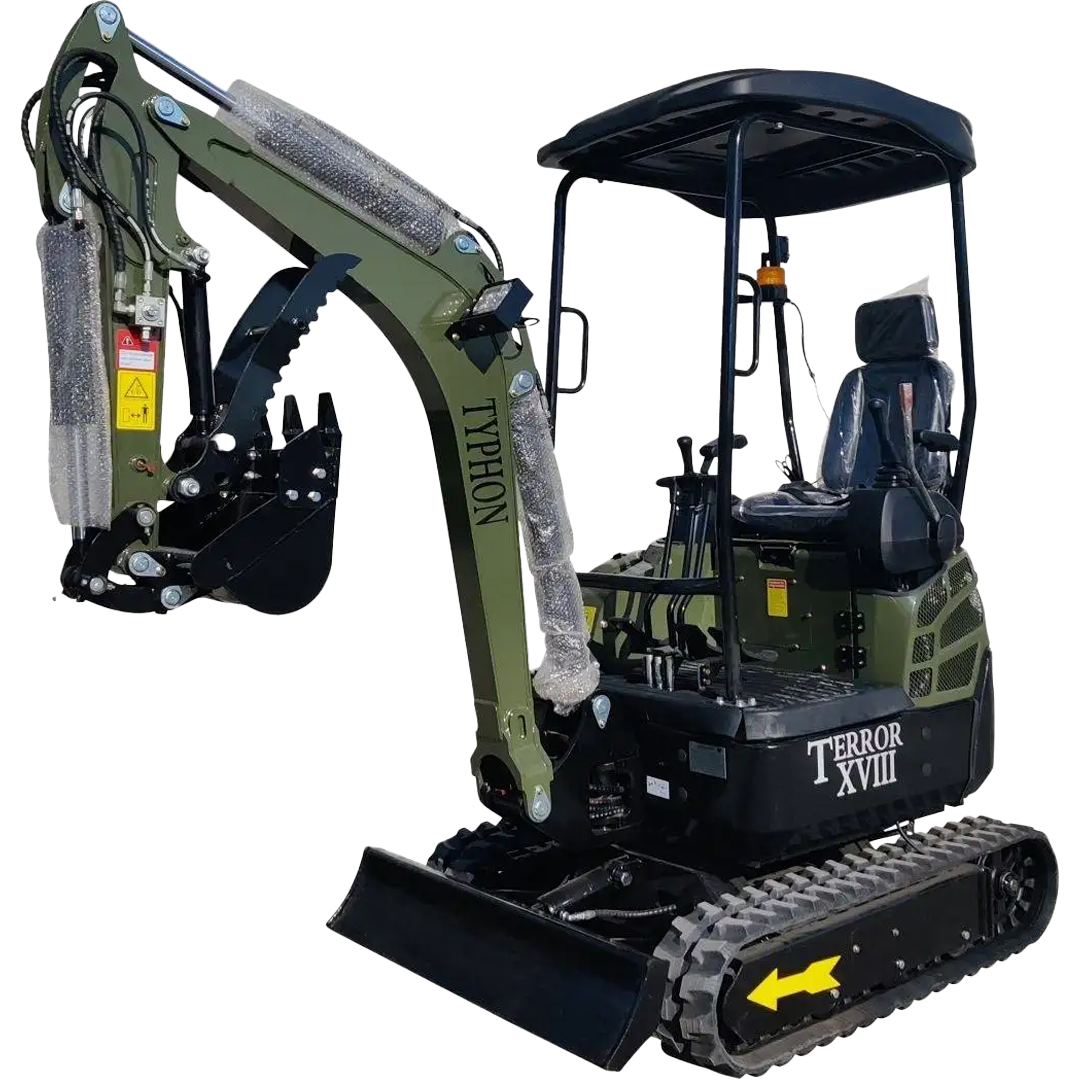
4000 lb Class | Kubota D902 EPA | Open Canopy Station
Utilizes smooth hydraulics for precise grading, sod layout, and soil preparation.
Deep digging capability perfect for laying foundations in confined urban areas.
Compact chassis width allows for easy maneuvering between tight crop rows.
Easy transport design ensures fast deployment to multiple job sites.
Low ground pressure tracks minimize lawn damage during residential work.
Free hydraulic thumb clip allows operator to grab, tear, and clear debris.
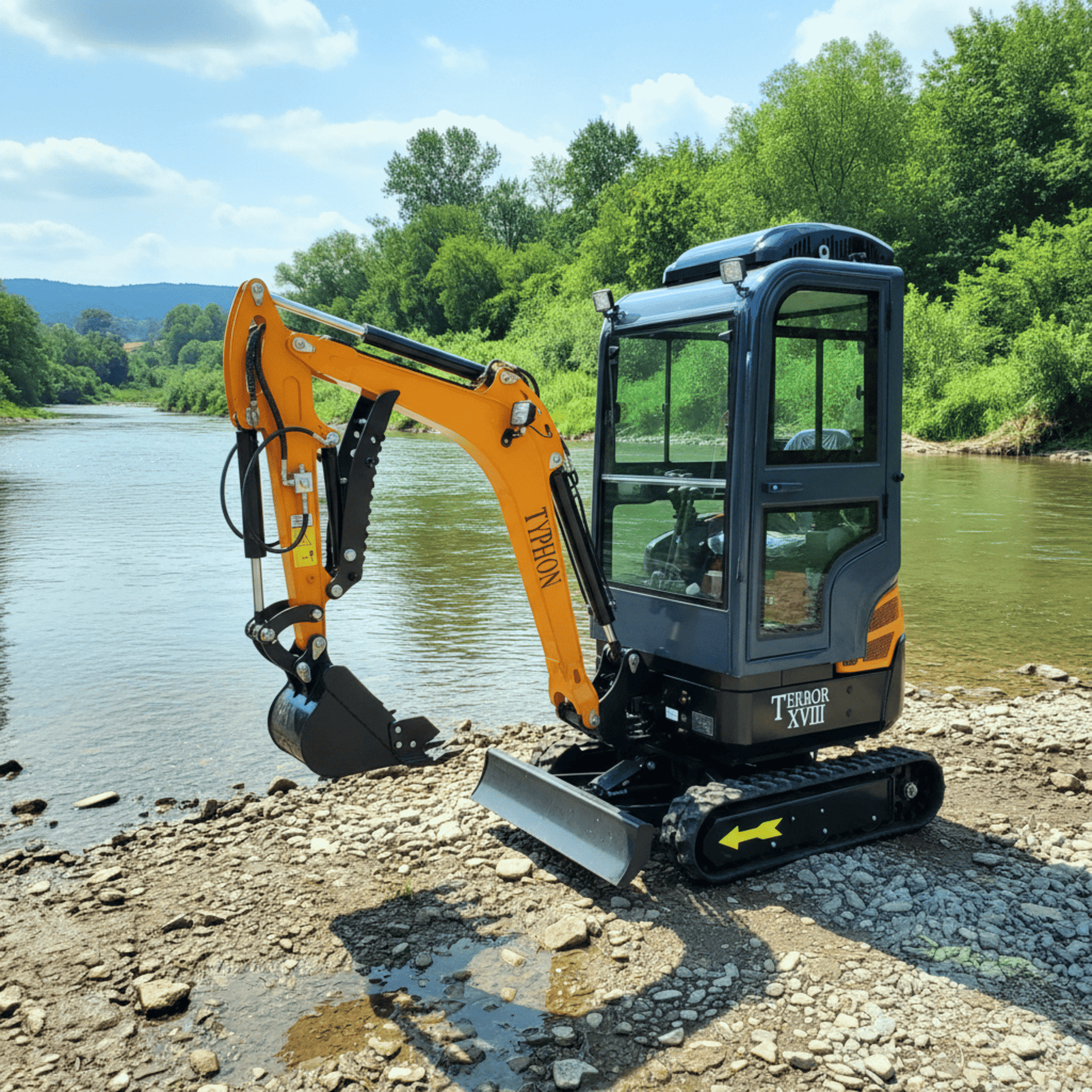
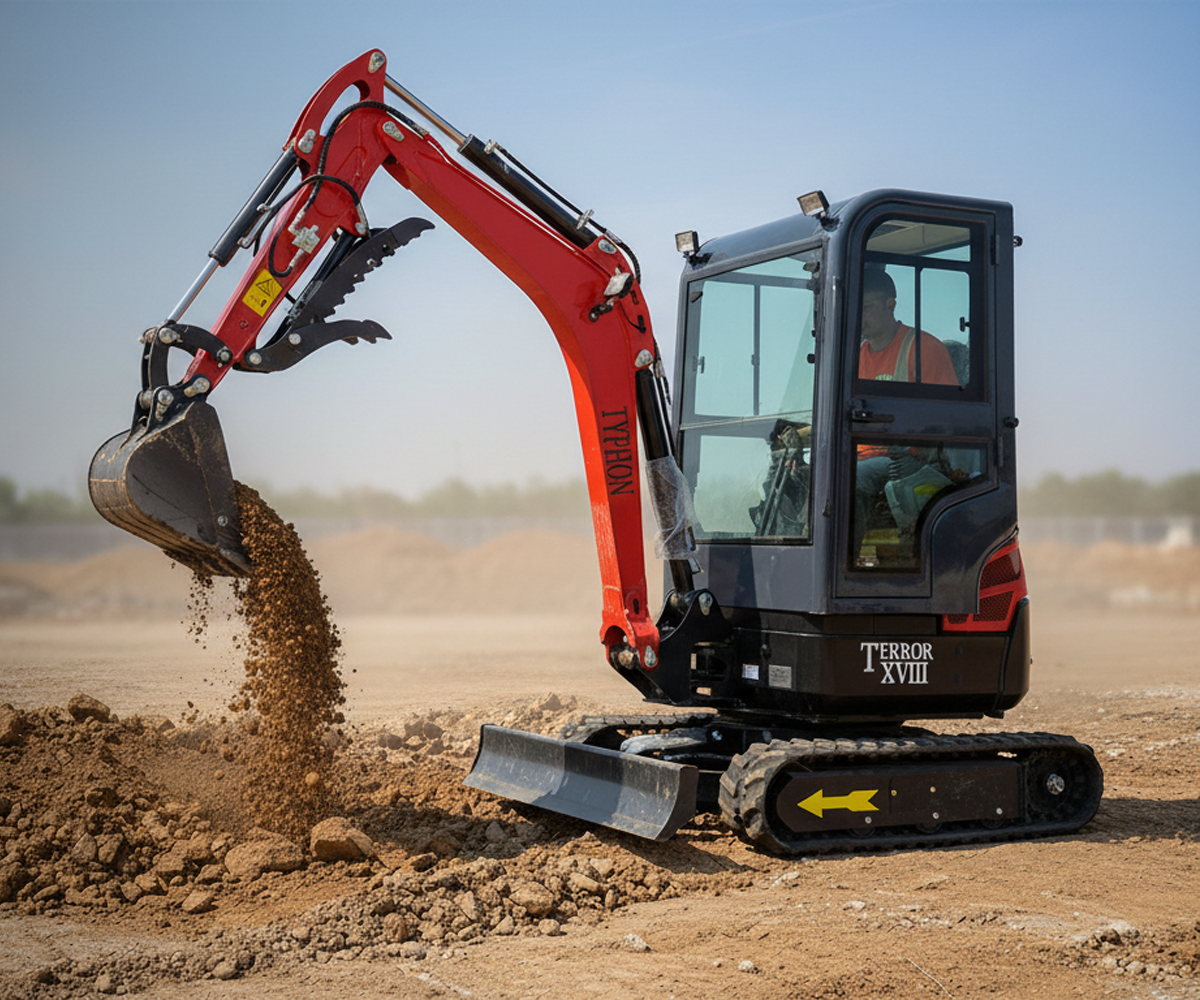
| Model Name | TYPHON TERROR XVIII Prestige |
|---|---|
| SKU Reference | TYPH-1802Y (Yellow) / 1802R (Red) / 1802G (Green) |
| Current Price | $12,999.00 (Was $15,500.00) |
| Operating Weight | 2 Ton (approx. 4400 lbs) |
| Gradeability / Application | Gardens, Farms, Parks, Public Spaces |
| Engine Make/Model | Kubota D902 |
|---|---|
| Engine Type | Vertical, Water-Cooled, 4-Cycle IDI Diesel |
| Cylinders | 3 Cylinder |
| Rated Output (High) | 20.4 HP @ 3600 RPM |
| Rated Output (Low) | 15.8 HP @ 2200 RPM |
| Cooling System | Water-Cooled |
| Emission Standard | EPA Certified (USA) |
| Max Digging Depth | 2060 mm |
|---|---|
| Max Digging Height | 2580 mm |
| Min Swing Radius | 1711 mm |
| Bucket Width | 380 mm |
| Bucket Capacity | 0.03 cbm |
| Boom Swing | Yes (Versatile Boom Swing) |
| Ground Clearance | Platform Ground Clearance Included |
| Model Name | TYPHON TERROR XVIII Standard / Rugged |
|---|---|
| SKU Reference | TYPH-1801Y (Yellow) / 1801G (Green) 1801R (Red) |
| Current Price | $11,888.00 (Was $13,500.00) |
| Operating Weight | 4000 lbs (approx. 1814 kg) |
| Series Type | Standard (Yellow) / Rugged Series (Green) / Lux Series (Red) |
| Engine Make/Model | Kubota D902 |
|---|---|
| Engine Type | Vertical, Water-Cooled, 4-Cycle IDI Diesel |
| Cylinders | 3 Cylinder |
| Rated Output | 20.4 HP @ 3600 RPM |
| Cooling System | Water-Cooled (Favorable Heat Dissipation) |
| Emission Standard | EPA Certified (USA) |
| Max Digging Depth | 2060 mm |
|---|---|
| Max Digging Height | 2580 mm |
| Min Swing Radius | 1711 mm |
| Bucket Width | 380 mm |
| Bucket Capacity | 0.03 cbm |
| Fuel Tank Capacity | 7.3 L |
| Hydraulic Oil Tank | 18.9 L |
| Boom Swing | Yes |
| Model Name | TYPHON TERROR VIII |
|---|---|
| SKU Reference | TYPH-0081 |
| Current Price | $8,398.00 |
| Operating Weight | 800 kg (0.8 Ton) |
| Design Type | Compact / User-Friendly |
| Engine Brand | Briggs & Stratton |
|---|---|
| Engine Type | EPA Gas Engine |
| Certifications | CE Certified / EPA Certified |
| Maintenance | Simple Design for Easy Maintenance |
Terror XVIII Series Unit
CORE UNIT380 mm (15 in) Standard Size
INCLUDEDToolbox with essential tools
INCLUDEDOperation & Maintenance Docs
DOWNLOADABLECabin (A/C + Heat) OR Canopy
MODEL DEPENDENTClip Included (Red/Green Rugged)
SELECT MODELSI've never operated an excavator before, just rented skid steers. I bought the Typhon [Model] for my property and figured out the controls in about 20 minutes. Very intuitive setup.
I needed to clear some old stumps and grade a slope in heavy clay. This machine didn't hesitate. The breakout force is impressive for a compact unit.
Dug a 200ft trench for a new water line last weekend. The narrow bucket made it clean and fast, and I fit right through the backyard gate without taking the fence down.
We use it to maintain drainage ditches between apple rows. It's compact enough to not damage the trees but heavy enough to stay stable on uneven ground.
The hydraulics are surprisingly smooth for this price point. The boom swing lets me dig right up against the foundation of the house without repositioning constantly.
I was worried about getting this delivered to my residential driveway. The carrier called ahead, showed up on time with a liftgate, and dropped it right where I wanted.
Ran it for 8 hours straight on Saturday and barely used half a tank. The engine starts up immediately every time, even on colder mornings here.
Upgraded to the cabin model and glad I did. The heater works great for winter work, and having the glass enclosure keeps the dust out of my face.
The machine is good, but the hydraulic thumb makes it great. I've been moving large rocks and logs that I never could have managed with just the bucket.
Dispatching to USA. Remote areas may require additional transit time.
Large truck/trailer access required.
Liftgate: Available for curbside drop-off (paved surface).
Tracking: Updates sent via Email or WhatsApp.
Everything you need to know about the Typhon [MODEL_NAME] before you buy.
Yes, reliability and compliance are top priorities. Our Typhon models equipped with the Kubota D902 diesel engine are listed as EPA certified, meaning they meet U.S. emissions standards for this engine class.
The specific Tier rating may depend on the exact manufacturing batch and configuration. We always recommend double-checking the engine specification plate or the datasheet provided on this page for the exact details of your unit.
This is the most common question we get! It really comes down to your comfort needs and working environment:
The Typhon [MODEL_NAME] is an incredibly versatile machine designed for a wide range of applications. Owners typically use it for:
With the right attachment, it can even handle light demolition work.
Your machine comes equipped with a standard digging bucket, but it is ready for much more. If your unit is equipped with auxiliary hydraulics, you can run powered attachments such as:
Please check the specific listing to confirm auxiliary line availability and coupler type.
Digging depth is model-dependent. for the Typhon Terror XVIII series, the maximum digging depth is rated up to 2060 mm (approximately 6.75 feet).
Please keep in mind that real-world results can vary slightly based on soil conditions, the bucket being used, and the angle of operation. This depth is generally sufficient for most residential utility lines, foundations, and drainage systems.
Yes, our goal is to provide a "turn-key" solution. The standard package typically includes:
Depending on the specific listing you choose, it will include either the Cabin or Canopy. Note: Bonus items like hydraulic thumbs are subject to specific SKUs or limited-time promotions—please verify your exact bundle at checkout.
We take the stress out of logistics. Once your order is processed (dispatch typically takes [1-3 business days]), we arrange freight delivery directly to your location.
Residential vs. Commercial: We deliver to both. If you are at a residential address without a loading dock, you can request Liftgate Service so the driver can lower the machine to the curb. You will receive a tracking number, and the carrier will typically call to set an appointment window.
We stand behind our machines. Warranty coverage varies by specific model (please see the "Warranty" tab for exact terms), but generally covers major component defects.
Beyond the warranty, we stock essential spare parts (filters, seals, belts) in our warehouse to keep you running. If you run into technical issues, our support team is available to provide service guidance via phone or video call to help you troubleshoot.
Yes! We understand that this is an investment in your business or property. Financing is available through our partner lenders, subject to credit approval.
The process is simple: you submit an application, and upon approval, we can determine monthly payments based on your term length and down payment. This allows you to get the machine now and pay over time.
