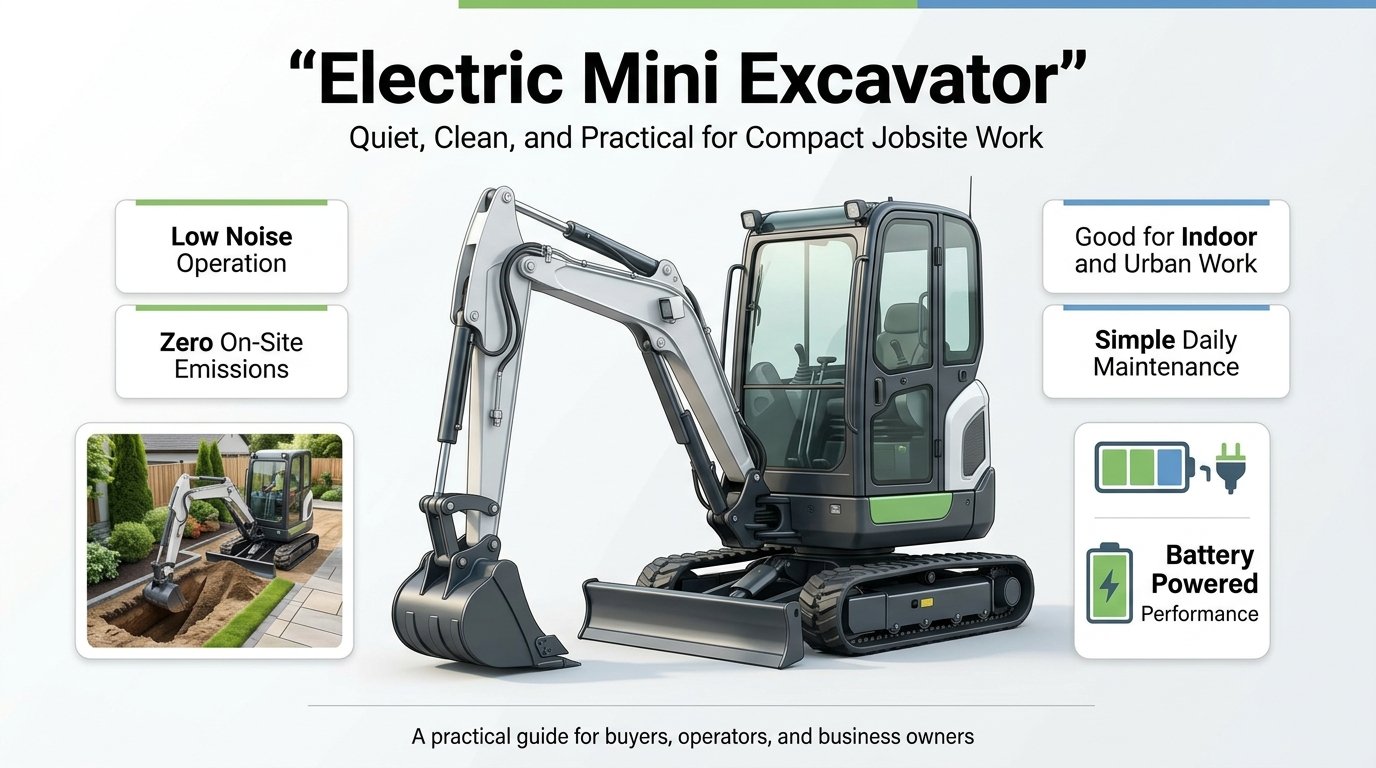
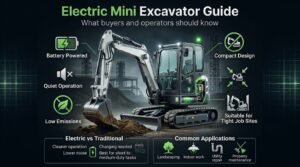
An electric mini excavator is a compact digging machine powered by a battery instead of a diesel engine. It is built for small digging, trenching, grading, landscaping, indoor work, and jobs where low noise or no exhaust fumes matter.
For many buyers, the main question is simple: is an electric mini excavator practical for real work? The answer depends on the job. These machines can be very useful in the right place, but they are not always the best choice for long, heavy digging days far from charging access.
This guide explains how electric mini excavators work, where they make sense, what to check before buying, and how to avoid common mistakes.
What Is an Electric Mini Excavator?
An electric mini excavator is similar to a regular mini excavator in size and function. It still uses tracks, a boom, an arm, a bucket, and hydraulic power to dig and lift. The main difference is the power source.
Instead of a diesel engine, the machine uses an electric motor and battery pack. The battery powers the motor, and the motor supports the hydraulic system. This allows the machine to dig, swing, travel, and operate attachments without burning fuel during use.
Most electric mini excavators are designed for compact job sites. They are often used where space is limited and where cleaner operation is important. Common sizes are usually in the small to compact range, making them suitable for landscaping, utility work, building renovation, and light construction.
The working style feels familiar for operators who already know how to use a mini excavator. The controls, digging motion, and jobsite use are mostly the same. The big difference is planning around battery runtime and charging.
Where an Electric Mini Excavator Works Best
An electric mini excavator works best on jobs where quiet operation, clean air, and compact size matter more than all-day heavy digging.
It is a good fit for indoor demolition, basement work, greenhouse work, tunnels, factories, and enclosed job sites. Since there are no diesel exhaust fumes during operation, the machine can work in places where ventilation is limited. That does not remove the need for safe jobsite planning, but it makes the machine easier to use in enclosed spaces.
It also works well in residential areas. Landscapers and contractors can dig near homes, schools, hospitals, or urban buildings with less noise compared with many diesel machines. This can help when working early in the morning or in noise-sensitive areas.
Electric models can also be useful for utility trenches, small drainage jobs, garden construction, fence lines, and light foundation work. For short jobs with regular charging access, they can be simple and efficient.
Where they may struggle is remote work with no power source, long digging shifts, and heavy-duty production work. If the machine needs to run hard all day, battery capacity becomes a major factor.
Main Benefits of Electric Mini Excavators
The biggest benefit of an electric mini excavator is cleaner operation at the job site. Because it does not burn diesel while working, there is no tailpipe exhaust during operation. This is useful indoors and in areas where air quality is a concern.
Noise is another clear advantage. Electric machines are usually quieter than diesel machines, especially when idling or moving slowly. This can make the job site more comfortable for the operator and nearby workers.
Operating cost can also be lower in some cases. There is no diesel fuel to buy for daily use, and electric motors usually have fewer engine-related service needs. There is no engine oil change in the same way as a diesel engine, and there are fewer engine parts to maintain.
However, the machine is not maintenance-free. It still has hydraulic oil, tracks, pins, bushings, filters, grease points, cooling systems, and wear parts. Buyers should avoid thinking electric means no maintenance. It simply changes the type of maintenance needed.
Another benefit is smoother operation. Electric power can give quick response and steady control, which is helpful for careful digging near walls, pipes, gardens, and finished surfaces.
What to Check Before Buying One
Before buying an electric mini excavator, start with the type of work you actually do. Do not choose one only because it sounds modern. Choose it because it fits your job sites.
Check the machine weight first. A smaller machine is easier to move and better for tight spaces, but it has less digging force and lifting power. A heavier machine usually gives better stability and stronger digging, but it may be harder to transport or use in narrow areas.
Next, check digging depth and reach. These numbers matter if you are digging trenches, drainage lines, footings, or utility work. A machine that cannot reach the required depth will slow the job down.
Battery runtime is one of the most important points. Ask how long the machine can work under normal use, not only light use. Digging hard soil, using attachments, traveling often, or working in cold weather can reduce runtime.
Also check charging time. Some machines may need several hours to fully charge. Others may support faster charging, depending on the charger and power supply. Make sure your job site or workshop can support the charging setup.
Hydraulic flow is another key detail if you plan to use attachments. Buckets may be simple, but tools like breakers, augers, grapples, and compactors need enough hydraulic power. Always match the attachment to the machine.
Battery Runtime and Charging Needs
Battery planning is the main difference between using an electric mini excavator and a diesel mini excavator.
With a diesel machine, you can refuel quickly and continue working. With an electric machine, you need to plan around charging time, battery size, and power access. This is not a problem for every job, but it must be planned before the machine arrives on site.
For short landscaping jobs, indoor renovation work, and small trenching tasks, one charge may be enough. For longer projects, charging during lunch breaks, overnight charging, or having a fixed charging point can help keep the machine ready.
Buyers should ask these questions before choosing a model:
Can it work long enough for my normal jobs?
Can I charge it at my workshop?
Can I charge it at the job site?
How long does a full charge take?
Does it need a standard outlet or a higher-power charger?
Will cold or hot weather affect performance?
The best machine is not always the one with the largest battery. It is the one that matches your normal workday, transport setup, and charging access.
Maintenance and Safety Tips
An electric mini excavator still needs regular checks. The battery and electrical system are important, but the basic machine parts also need attention.
Operators should check hydraulic oil levels, track tension, bucket pins, grease points, hoses, undercarriage condition, warning lights, and attachment connections. These checks help prevent small problems from turning into expensive repairs.
Battery care is also important. Follow the manufacturer’s charging instructions. Avoid using damaged chargers or cables. Keep charging areas dry, clean, and properly ventilated. Do not ignore warning messages related to battery temperature, charging faults, or electrical system errors.
For safety, treat the machine like any other excavator. Keep bystanders away from the swing area. Use the seat belt. Work on stable ground. Do not overload the machine. Be careful when lifting objects, digging near utilities, or working on slopes.
Electric power does not remove normal excavator risks. The machine is quieter, so workers nearby may not hear it as easily. Operators should use clear signals and stay aware of people around the machine.
Is an Electric Mini Excavator Right for Your Work?
An electric mini excavator is a smart choice when the job needs low noise, cleaner operation, and compact digging power. It can be a strong fit for indoor jobs, residential work, landscaping, utility repairs, and sites with charging access.
It may not be the best choice for every contractor. If your work is mostly remote, heavy, and all-day digging with no reliable power source, a diesel mini excavator may still be more practical.
The right decision comes down to your daily work. Look at where the machine will be used, how long it needs to run, what attachments you need, and how easily you can charge it. When those points line up, an electric mini excavator can be a useful and practical machine.
Conclusion
An electric mini excavator is not just a cleaner version of a diesel machine. It is a compact excavator with a different way of working. It offers low noise, no jobsite exhaust during use, and simpler engine-related maintenance, but it also needs careful battery and charging planning.
For buyers, the best approach is simple: match the machine to the job, not the trend. If the work is compact, controlled, and close to charging access, an electric mini excavator can be a strong choice.