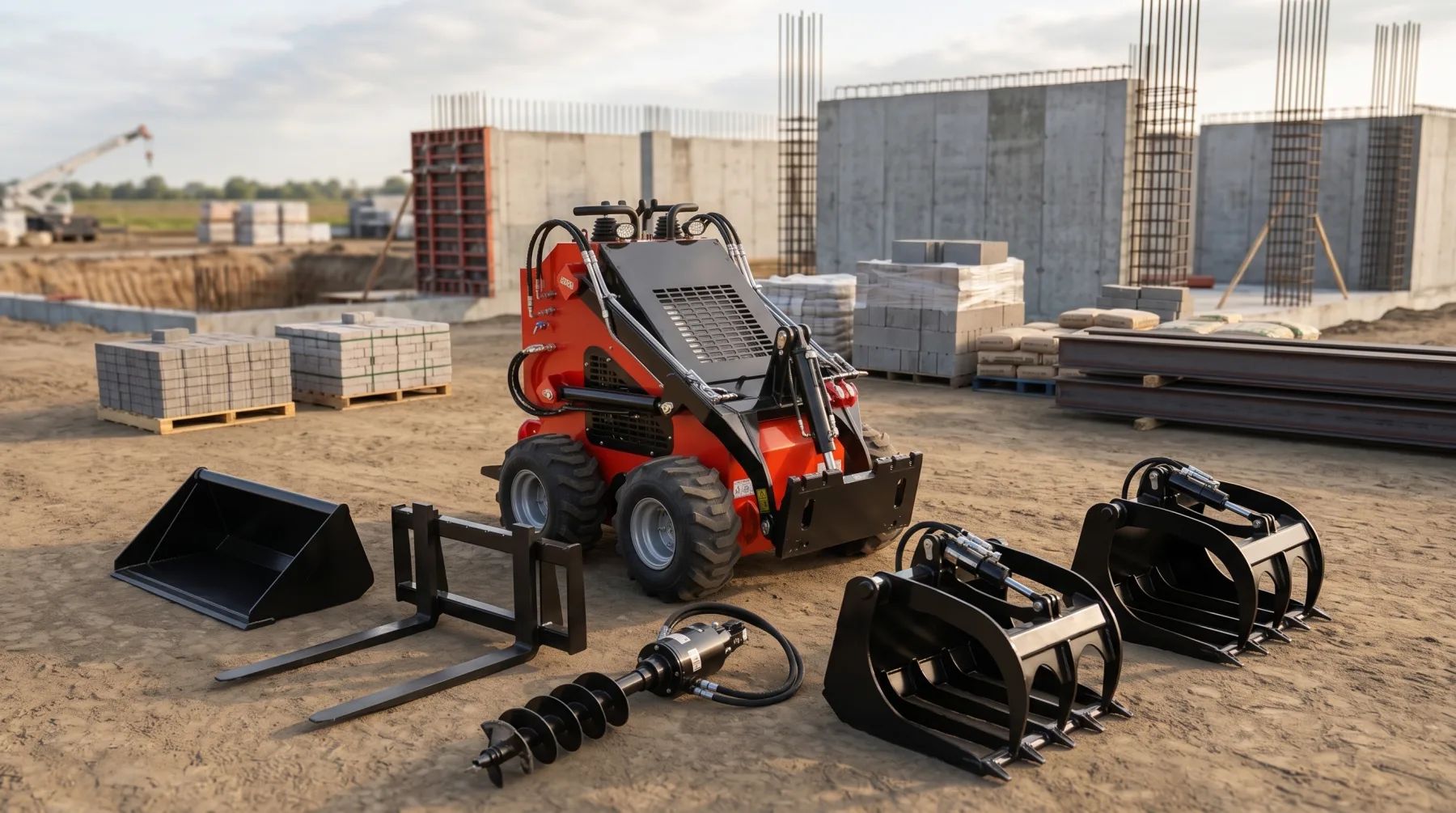
The skid steer is only half the machine you paid for. Park it with nothing but a standard bucket, and you’ve bought a one-trick tool when you could have had a whole fleet. The real value lives in the attachments, the pieces that turn a single loader into a digger, a lifter, a mower, and a breaker without buying a shed full of separate equipment. Swap a coupler, reconnect the hydraulics, and the same machine handles a completely different job in under a minute.
For contractors, that versatility is where the profit hides. Every attachment you own is one less machine to rent, one more job you can bid, and hours of manual labor you never have to pay for again. The trick is knowing which attachments earn their keep and which just gather dust in the corner of the yard.
The best attachment lineup depends on the type of work you do most often. Landscapers may rely on grapples, augers, and trenchers, while construction crews benefit from pallet forks, hydraulic breakers, and grading attachments. By choosing attachments that match your everyday tasks, you can maximize the value of your skid steer, complete more projects with a single machine, and improve productivity without significantly increasing equipment costs.
The General-Purpose Bucket
The bucket is the attachment that came with your machine, and for good reason. It’s the workhorse you’ll reach for more than any other, moving material and handling the everyday grunt work that fills most job sites.
A general-purpose bucket scoops, carries, loads, and grades loose material like soil, gravel, sand, and debris. It’s the tool you use to load trucks, backfill trenches, spread aggregate, and clean up a site at the end of the day.
The Essential Attachment for Everyday Jobs
A general-purpose bucket is the most frequently used skid steer attachment because it supports almost every stage of a project. It easily handles loading soil, gravel, sand, and aggregate, backfilling around foundations and trenches, spreading material, leveling surfaces, and cleaning up debris at the end of the day.
Its versatility reduces attachment changes, helping crews work more efficiently and complete jobs faster. For most contractors, a quality general-purpose bucket is an essential attachment that delivers reliable performance on nearly every jobsite.
Pallet Forks
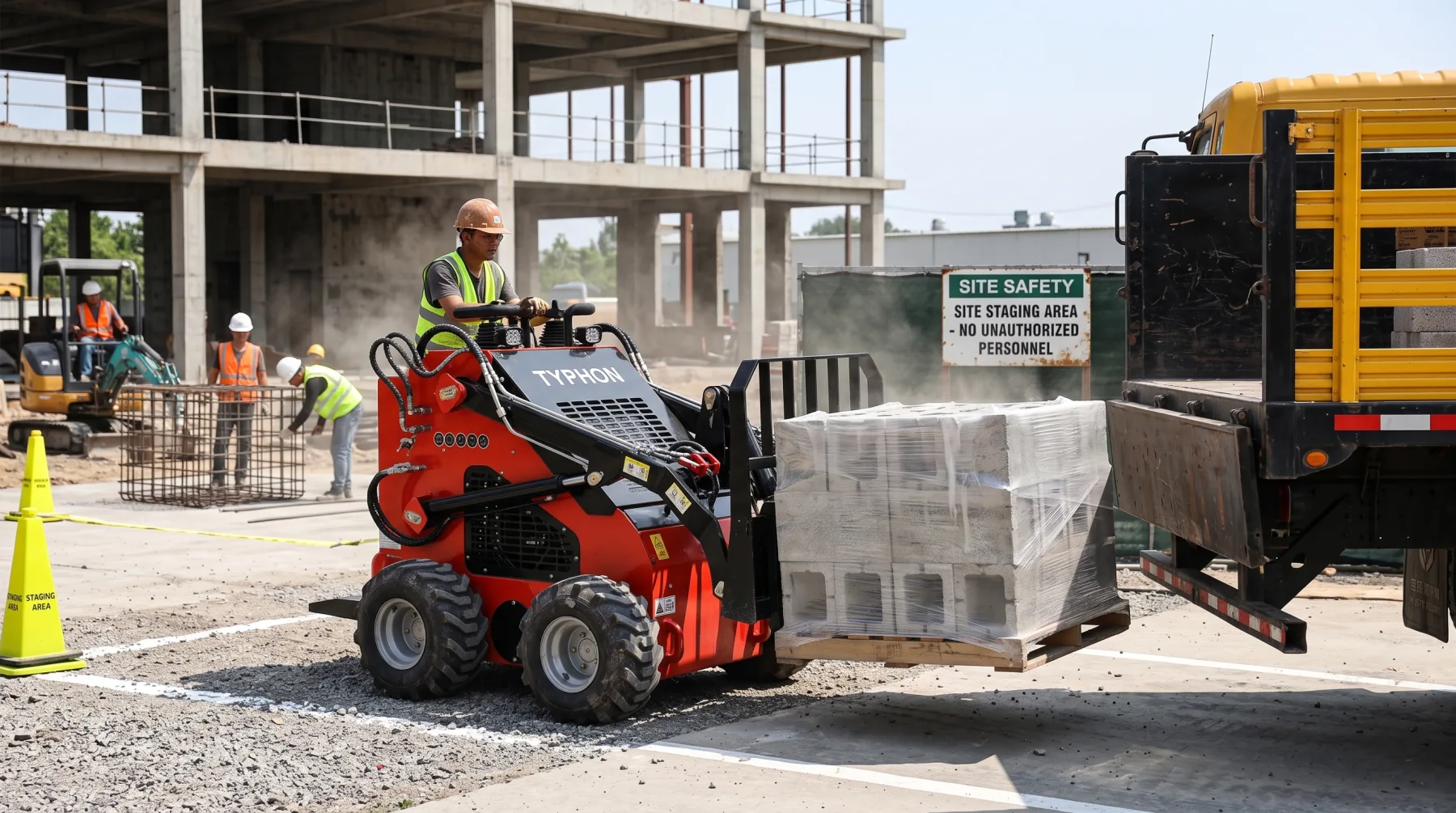
The moment you need to move a pallet, a bundle of blocks, or a stack of lumber, a bucket becomes useless. Pallet forks turn your skid steer into a forklift that goes places a warehouse machine never could.
Pallet forks slide under palletized loads, packaged materials, and awkward bundles, letting you lift and carry them across rough, unpaved ground. They handle deliveries, staging, and material moves that would otherwise tie up a crew by hand.
Improve Material Handling Across the Jobsite
Pallet forks are one of the most useful skid steer attachments for moving heavy, palletized materials quickly and safely. They make unloading concrete blocks, bricks, lumber, bagged materials, and other supplies much easier while reducing manual lifting and keeping jobsites organized.
Their compact design allows them to work in tight spaces and across uneven terrain where larger forklifts may not fit. Whether unloading deliveries, staging materials, or loading trailers, pallet forks improve efficiency and provide a cost-effective solution for everyday lifting and material handling tasks.
The Auger
Digging holes by hand is one of the slowest, most exhausting jobs on any site, and doing it consistently along a fence line or footing is nearly impossible with a shovel. An auger turns hours of digging into minutes of drilling.
An auger attachment bores clean, uniform holes for fence posts, footings, deck supports, and tree planting. Swap the bit to match the diameter you need, and it powers through hard, rocky, and compacted ground that stops a hand auger cold.
Drill Accurate Holes with Less Effort
An auger attachment makes digging post holes faster, easier, and far more consistent than manual labor. Whether you’re installing fence posts, deck footings, signposts, light poles, or planting trees and shrubs, an auger drills clean, uniform holes at the required depth with minimal effort. This improves accuracy while reducing the physical strain of hand digging.
For contractors and property owners who regularly tackle fencing, landscaping, or foundation work, an auger can dramatically increase productivity and shorten project timelines. By completing in hours what could otherwise take an entire day, it helps crews work more efficiently and move on to the next task faster.
The Grapple
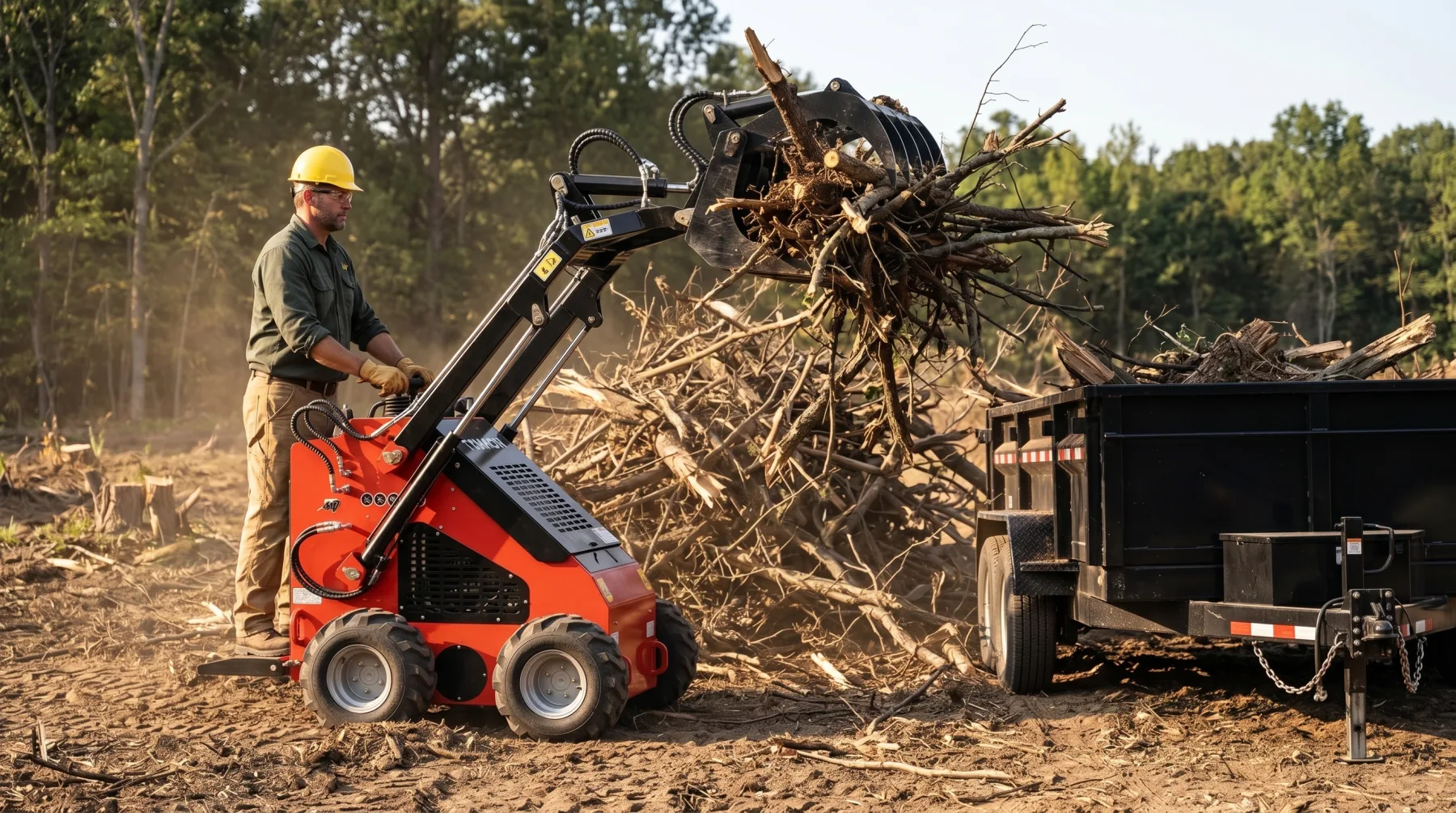
Loose, awkward, and tangled material is the enemy of a clean bucket. Brush, rock, demolition debris, and logs all slide, roll, and fall out. A grapple grips what a bucket can only push.
A grapple attachment uses hydraulic jaws to clamp down on irregular loads, holding them tight while you lift, carry, and load. Whether it’s brush, scrap, rock, or logs, the grapple grabs it and doesn’t let go.
Handle Irregular Materials with Confidence
A grapple attachment is designed to securely grip bulky, uneven, and difficult-to-handle materials that a standard bucket cannot manage effectively. It makes land clearing, demolition cleanup, storm recovery, and log handling much faster by allowing operators to grab brush, branches, concrete, lumber, rocks, and scrap materials in a single load instead of repeatedly scooping loose debris.
For contractors who regularly work on clearing or cleanup projects, a grapple improves productivity while reducing manual labor and unnecessary material handling. Its strong clamping force provides better control during loading and transport, helping crews clear jobsites more efficiently and safely.
The Brush Cutter
Overgrown lots, fence lines, and field edges stall projects and hide hazards. Clearing them by hand with saws and trimmers burns days and wears out your crew. A brush cutter mows through it all in a single pass.
A brush cutter (or rotary cutter) shreds tall grass, weeds, brush, and small saplings, turning dense growth into mulch you leave on the ground. Heavy-duty models handle saplings several inches thick without slowing down.
Clear Overgrown Areas Faster
A brush cutter attachment quickly clears thick grass, weeds, dense brush, and small saplings, making it an essential tool for land clearing and site preparation. Instead of relying on handheld equipment, operators can reclaim overgrown lots, maintain fence lines, clear trails, and prepare properties for construction or landscaping in far less time.
For contractors responsible for vegetation management, a brush cutter improves productivity while reducing labor and equipment costs. Its ability to cover large areas quickly allows projects to begin sooner and keeps properties clean, accessible, and ready for the next phase of work.
The Trencher
Running utilities, drainage, or irrigation means digging long, straight, consistent trenches, and no shovel crew can match a machine for speed or accuracy. A trencher cuts clean lines fast.
A trencher attachment digs uniform trenches for pipe, cable, conduit, and drainage at a steady, controlled depth. Match the chain depth and width to your line, and it carves through soil and packed ground in a fraction of the manual time.
Create Clean, Consistent Trenches
A trencher attachment makes it easy to dig straight, uniform trenches for utility lines, electrical cables, drainage systems, irrigation networks, and plumbing installations. It delivers consistent depth and width throughout the job, reducing the need for manual corrections and helping projects stay on schedule.
For contractors who frequently install underground services, a trencher significantly improves efficiency while reducing the physical demands of hand digging. Faster trenching means crews can complete installations sooner, minimize labor costs, and achieve cleaner, more professional results.
The Box Blade
Rough, uneven ground makes for unstable pads and poor drainage, and grading it by hand is slow and rarely precise. A box blade shapes the surface into a clean, level, well-draining base.
A box blade attachment cuts high spots, fills low areas, and spreads material to a smooth, consistent grade. It’s the tool that turns a rough site into a finished pad, driveway, or lot ready for what comes next.
Achieve Smooth, Professional Grading
A box blade attachment is designed to create smooth, level surfaces with greater accuracy than a standard bucket. It efficiently cuts high spots, fills low areas, and evenly spreads material, making it ideal for preparing building pads, shaping driveways, leveling parking areas, and performing final site grading before construction or paving.
For contractors involved in site preparation and landscaping, a box blade helps produce consistent, professional-quality results while reducing the number of passes needed to finish the job. This improves productivity, minimizes rework, and helps projects move to the next stage more quickly.
The Hydraulic Breaker
Some jobs call for raw demolition power. Breaking up concrete, asphalt, or rock by hand with a jackhammer is brutal, slow work. A hydraulic breaker brings serious force to bear from the seat of your machine.
A hydraulic breaker (or hammer) uses your skid steer’s hydraulics to deliver powerful, repeated blows that shatter concrete, asphalt, rock, and masonry. It handles the heavy demolition that no bucket or manual tool can touch.
Break Through Tough Materials Efficiently
A hydraulic breaker turns a skid steer into a powerful demolition machine capable of breaking concrete, asphalt, rock, and masonry with ease. It is ideal for removing concrete slabs and foundations, breaking up pavement before repairs, clearing large rocks during excavation, and handling renovation or demolition projects that require controlled, high-impact force.
For contractors working in construction, demolition, or site preparation, a hydraulic breaker eliminates the need for extensive manual jackhammering and reduces reliance on specialized demolition equipment. It speeds up tough jobs, lowers labor costs, and allows crews to complete demanding tasks more efficiently.
Conclusion
The right attachments transform a skid steer from a single-purpose loader into a versatile machine capable of handling a wide range of jobs. Buckets and pallet forks simplify material handling, augers and trenchers speed up fencing and utility installation, grapples and hydraulic breakers tackle clearing and demolition, while brush cutters and grading attachments prepare sites quickly and efficiently. Each attachment reduces manual labor, minimizes the need for rental equipment, and gives you the flexibility to take on more projects with a single machine.
The best results come from building an attachment lineup around the work you perform most often and expanding it as your business grows. A well-equipped skid steer helps improve productivity, lowers operating costs, and keeps your equipment working across multiple applications throughout the year. By choosing compatible attachments and the right hydraulic configuration, you can maximize your machine’s capabilities and gain a more reliable, cost-effective solution for both current and future projects.
Frequently Asked Questions
Which skid steer attachment should a contractor buy first?
Start with the attachments your work demands most often. For nearly everyone, a general-purpose bucket and a set of pallet forks form the core, since they cover material handling and load moving on almost every job. From there, add based on your trade: an auger for fencing and footings, a grapple for clearing and demolition, or a trencher for utility work. Buy for the jobs you already bid regularly, then expand as your workload grows.
Do I need high-flow hydraulics to run these attachments?
For some, yes. Simple attachments like buckets, pallet forks, and augers run fine on standard-flow hydraulics. But demanding, hydraulically driven tools such as brush cutters, large trenchers, and cold planers often require high-flow hydraulics to perform at full capacity. Before buying any powered attachment, check its flow and pressure requirements against your machine’s rating, so you get the productivity you’re paying for instead of a tool that bogs down.
Is it better to buy or rent skid steer attachments?
It comes down to how often you’ll use each one. For attachments you reach for regularly, like buckets, forks, and augers, owning almost always costs less over time and keeps the tool ready whenever you need it. For specialty attachments you’ll use once or twice a year, such as a cold planer or a stump grinder, renting can make more sense. Weigh the purchase price against how many jobs the attachment will actually earn its way onto.