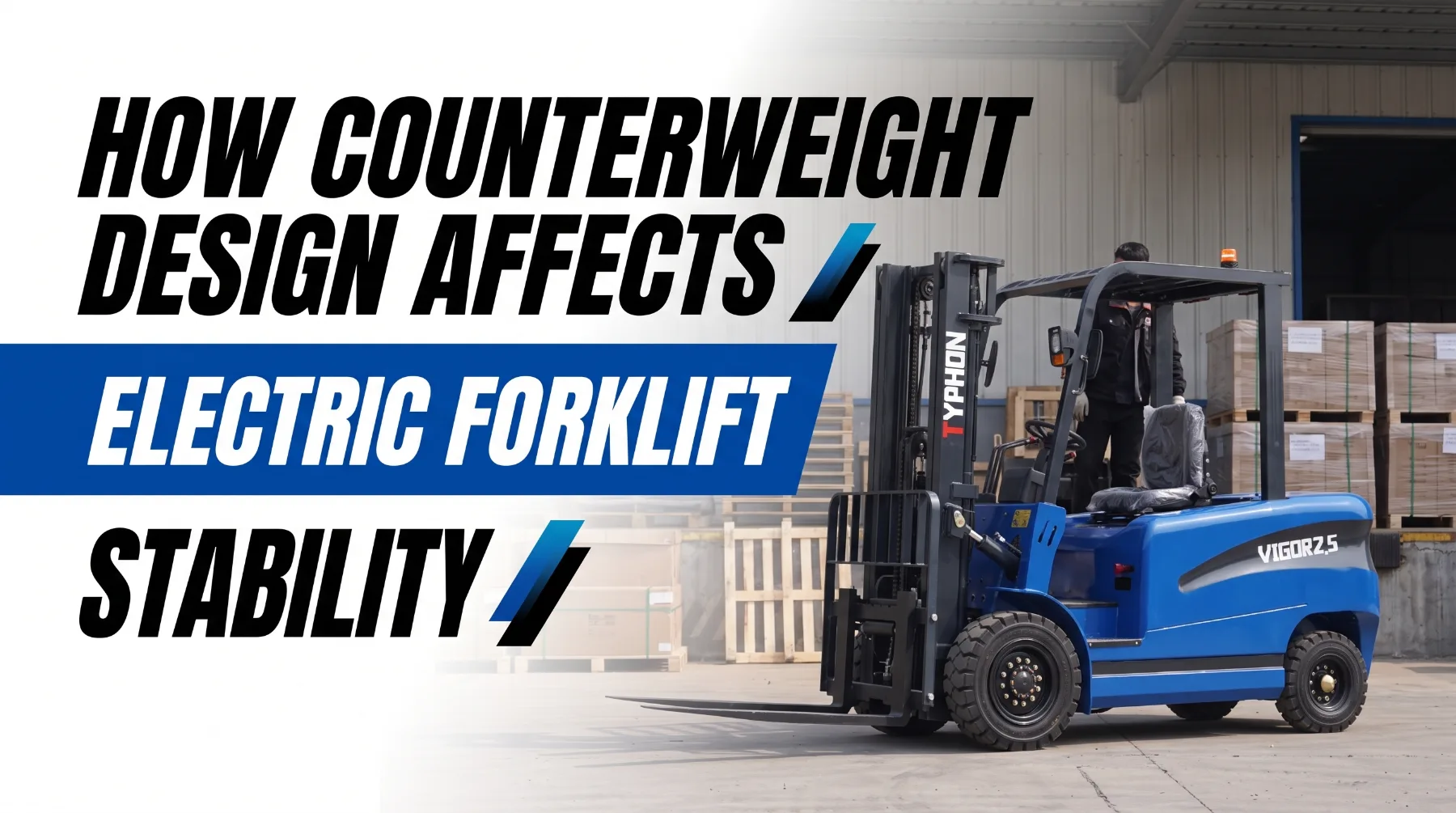
How Counterweight Design Affects Electric Forklift Stability
A warehouse operator eases an electric forklift toward a loading dock with a full pallet raised chest-high, and something about the way the machine settles into the turn tells a story before anyone reads a spec sheet. The forklift tracks steadily through the corner, planted and sure, and the operator never once feels the rear wheels grow light. A visitor watching from the dock assumes the smooth handling comes from the driver’s skill alone, yet most of that steadiness was designed into the machine long before it ever reached the floor. The heavy block of steel and the battery riding behind the operator are quietly doing their job, balancing every ounce of that load out front. That hidden balance is exactly what counterweight design decides, and understanding it is what separates a forklift that feels rock-solid from one that keeps an operator guessing.
Counterweight design shapes how safely an electric forklift carries a load, because the mass behind the operator balances every pound the forks lift out front. Knowing how that balance works, how the battery plays its part, and how the design sets the machine’s real limits helps you choose and run the right forklift with confidence.
Why the Counterweight Sits at the Heart of Stability
Balance is the whole reason a counterweight exists, since a forklift lifts heavy loads on forks that reach out well ahead of its front wheels. That load creates a strong forward and downward force, and without something heavy behind the front axle to oppose it, the machine would simply tip forward the moment it picked up a weight. The counterweight is the deliberate mass built into the rear that keeps the forklift planted.
Leverage explains why the counterweight works as well as it does, because the front axle acts as a pivot point between the load and the counter mass. The load out front tries to rotate the machine forward over that pivot, while the counterweight behind it pulls in the opposite direction, and the two forces balance across the axle like weights on a seesaw. A design that gets this balance right lets the forklift hold a rated load steady rather than teetering at the edge.
Confidence on the floor follows directly from a counterweight matched to the machine’s job, since an operator who trusts the forklift works smoothly rather than second-guessing every lift. A well-balanced machine carries its rated load through turns, over ramps, and up to full lift height without feeling light or tippy, which keeps both the operator and the surrounding crew safe. Key takeaway: the counterweight is the rear mass that balances the load on the forks across the front axle, so it sits at the very heart of how safely an electric forklift carries weight.
Understanding How the Stability Triangle Works
Three points define a forklift’s stability rather than the four wheels you might expect, and this surprises many new operators. Most counterbalance forklifts steer with the rear wheels through a single central pivot, so the machine’s support forms a triangle connecting the two front wheels and that single rear pivot point. Everything about the forklift’s balance plays out inside that three-sided shape.
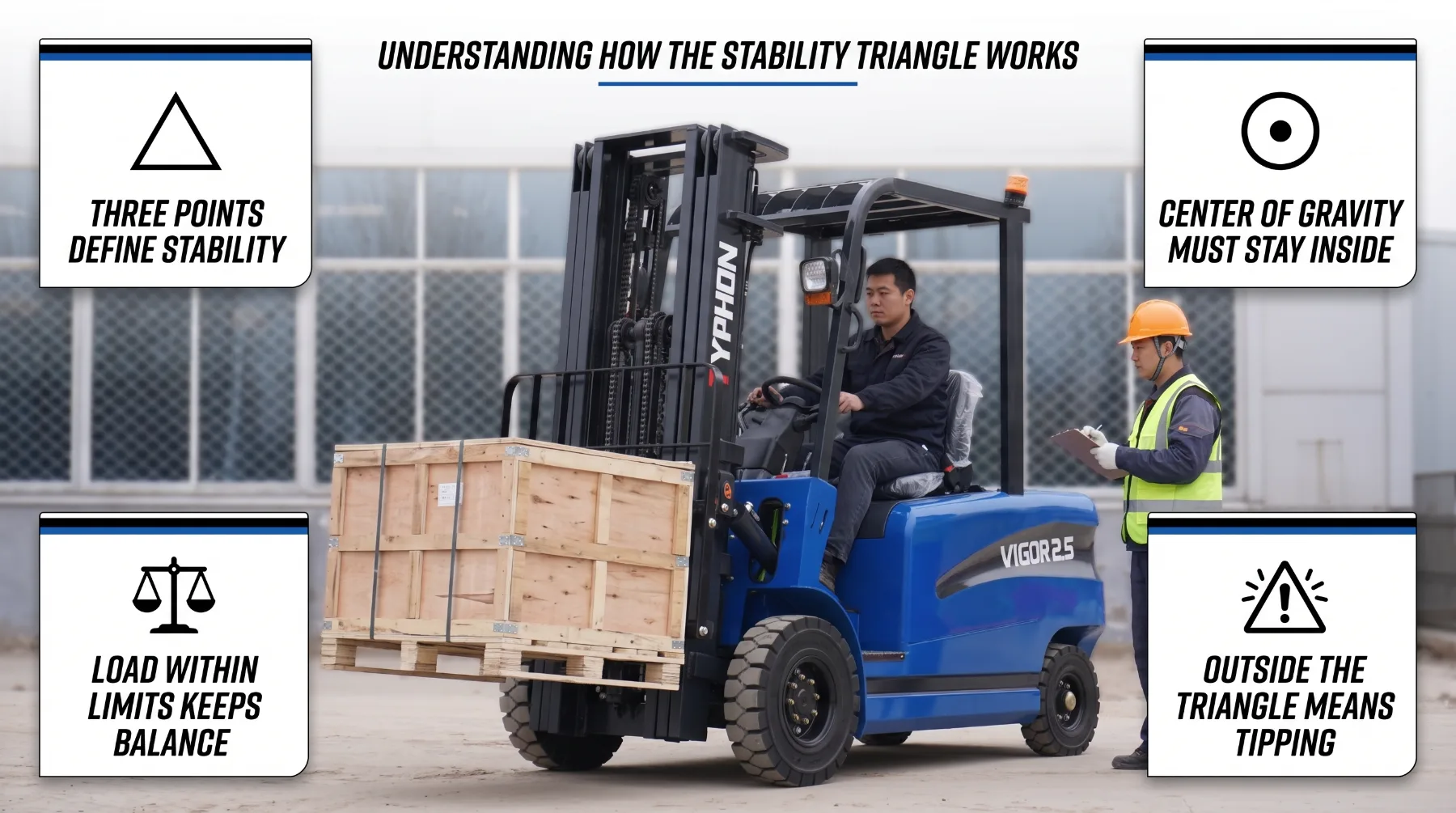
The center of gravity is the point that must stay within the triangle for the machine to remain stable, because it represents the balance point of the forklift and whatever it carries. When the forklift sits empty or holds a load within its limits, the combined center of gravity rests safely inside the triangle, keeping all three support points planted. Push that center of gravity outside the triangle, though, and the machine tips over the nearest edge.
Loads and motion both shift that center of gravity, which is why the triangle matters in daily work rather than just in theory. Lifting a heavy load moves the center of gravity forward and up, turning sharply pushes it toward a side, and doing both at once drives it toward a corner of the triangle where stability runs thinnest. Key takeaway: a forklift balances on a three-point stability triangle, and the machine stays upright only as long as its combined center of gravity stays inside that triangle.
How Battery Placement Acts as Counterweight on an Electric Forklift
Here is where an electric forklift differs from its engine-powered cousin in a clever way. An electric machine carries a large, heavy traction battery to run its motors, and manufacturers position that battery low in the chassis behind the front axle so it does double duty. The battery powers the forklift and, at the same time, serves as a substantial part of the counterweight the machine needs to stay balanced.
Integration of the battery into the balance is a deliberate engineering choice rather than a happy accident, since the battery’s considerable mass lets designers rely on it as counter weight and add only enough solid steel to reach the target. Placing that heavy battery low and to the rear lowers the machine’s center of gravity while pulling the balance point backward, both of which help the forklift stay steady under a load. The result is a compact machine that carries real capacity without an oversized steel block.
Battery weight therefore becomes a stability factor, not just a power spec, which carries a real warning for owners. Because the battery contributes to the counterbalance, swapping in a lighter battery than the machine was designed for can quietly reduce stability, so any replacement should match the manufacturer’s specified weight. Key takeaway: on an electric forklift the traction battery doubles as a major part of the counterweight, so its weight and placement are essential to stability and any replacement must match the specified weight.
How Counterweight Mass and Positioning Affect Rated Capacity
Rated capacity flows directly from the counterweight, because the amount of weight a forklift can safely lift depends on how much opposing mass sits behind the front axle. A heavier, well-placed counterweight balances a heavier load, so manufacturers size the counter mass to deliver the capacity a given machine promises. The number stamped on the data plate is, in large part, a reflection of the counterweight built into the rear.
Load center ties the rating to positioning in a way buyers must understand, since capacity assumes the load sits a standard distance out from the fork face. Rated capacity is quoted at a specific load center, commonly twenty-four inches, and a load whose weight sits farther out reaches with more leverage against the counterweight, which lowers the weight the machine can safely handle. Carrying a deep or bulky load pushes its center farther forward and effectively reduces capacity below the plate figure.
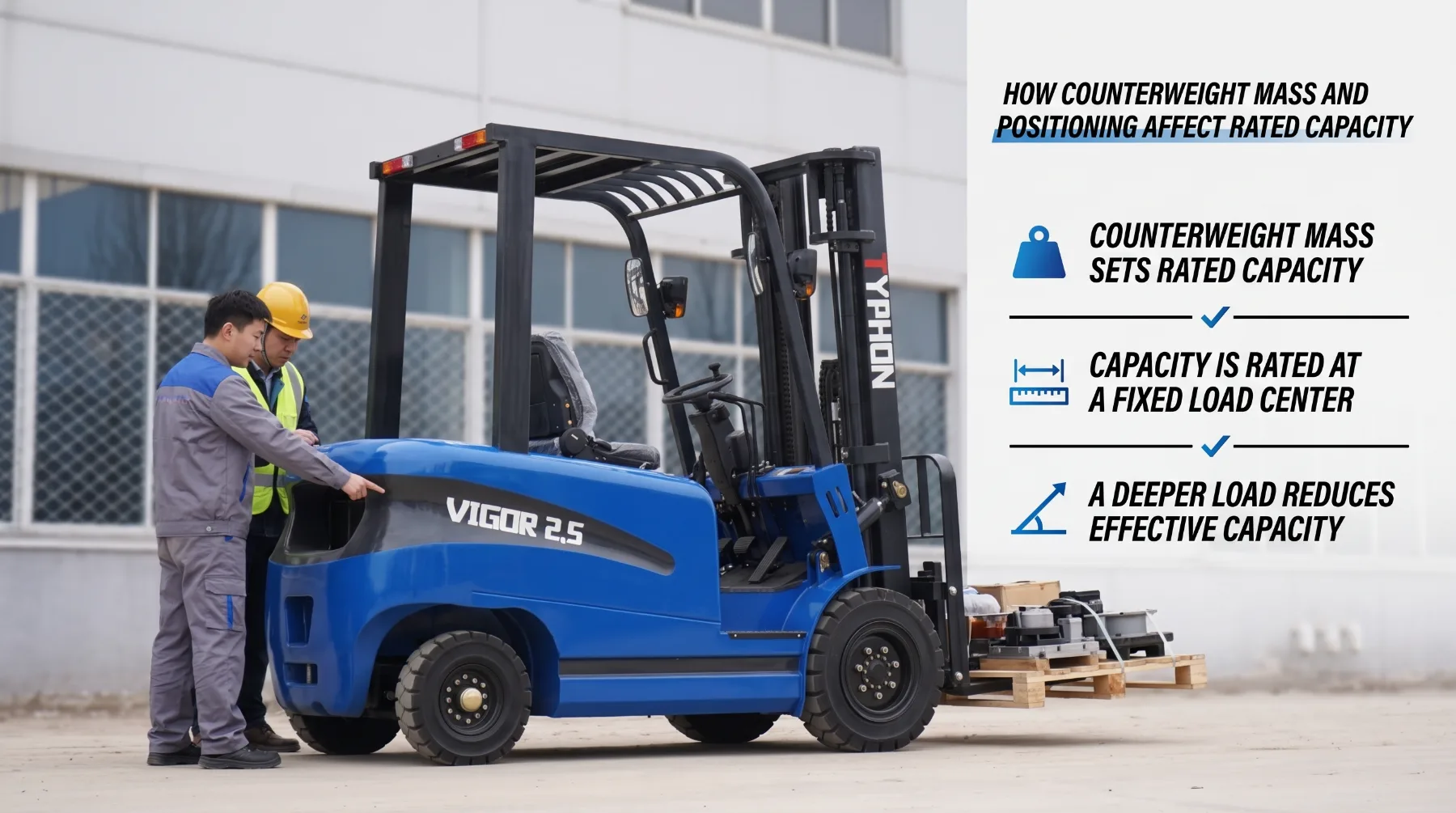
Positioning of the counter mass matters as much as its sheer weight, because how far back the mass sits changes the leverage it provides. A counterweight placed farther behind the front axle balances a load with more mechanical advantage than the same weight tucked in close, so designers weigh both mass and position to hit a capacity target without making the machine needlessly long. Key takeaway: rated capacity depends on both the counterweight’s mass and its position, and because capacity is quoted at a standard load center, loads that sit farther forward lower the weight the forklift can safely lift.
Weighing Dynamic Versus Static Stability
Static stability describes how the forklift balances when it sits still, and it is the simpler of the two to picture. With the machine parked, stability comes down to whether the combined center of gravity of the forklift and its load rests safely inside the stability triangle, holding all three support points planted. A machine that balances well standing still has met only the first, most basic test.
Dynamic stability describes how the machine holds up while it moves, and this is where real operating risk lives. Accelerating, braking, turning, and traveling with a raised load all create forces that shift the center of gravity beyond where it sits at rest, so a forklift perfectly stable when parked can still tip if driven carelessly. A sharp turn throws the balance point toward the side of the triangle, and braking hard with a high load drives it forward, each nudging the machine toward its limit.
Counterweight design helps on both fronts, though operator habits carry the dynamic side the rest of the way. A well-balanced machine with a low center of gravity resists the forces that motion creates, yet no design can save a forklift driven too fast into a turn or stopped too hard with a load held high, so safe operation completes what the counterweight begins. Key takeaway: static stability keeps a parked forklift balanced while dynamic stability governs it in motion, and a sound counterweight design plus careful operating habits are what keep the machine upright through real work.
Matching Counterweight Design to Your Operation
Selection should start with an honest look at the loads the forklift will carry, because the weight and shape of your typical load anchor every other choice. Name the heaviest load you handle regularly and note how far its weight sits from the fork face, then confirm a machine’s rated capacity at your real load center comfortably covers it. Sizing the forklift to the loads you actually lift keeps the machine balanced rather than pressed to its edge.
Environment shapes the decision alongside the load, since where the forklift works influences how much stability margin you need. A machine running long distances, crossing ramps, or turning often in tight aisles faces more of the dynamic forces that test balance, so an operation with demanding travel benefits from a design that carries steadiness to spare. Weighing your aisles, your grades, and your travel distances guards against a machine that feels secure standing still yet nervous in motion.
Guidance from a knowledgeable equipment source turns your assessment into a confident purchase, because matching counterweight design, battery weight, and rated capacity to a real workload rewards experience. Describing your loads, your load centers, your battery needs, and your working environment to a trusted specialist lets them recommend a forklift built for the results you need rather than a generic guess. Key takeaway: match counterweight design to your operation by sizing capacity to your real loads and load centers, accounting for your working environment, and leaning on a trusted specialist so the machine stays stable where it earns its keep.
Conclusion
Counterweight design shapes electric forklift stability through a balance that runs from the load on the forks to the mass behind the operator, and the full picture holds once you follow each piece in turn. Start by recognizing why the counterweight sits at the heart of stability, opposing the load across the front axle like weights on a seesaw. Understand how the stability triangle works, keeping the machine upright only while its center of gravity stays inside that three-point shape. See how an electric forklift’s traction battery doubles as a major part of the counterweight, so its weight and low placement are essential to balance. Weigh how counterweight mass and positioning set the rated capacity, quoted at a standard load center that loads sitting farther forward quietly erode. Account for the difference between static and dynamic stability, where careful operating habits complete what a sound design begins, then match the counterweight design to your real loads, load centers, and working environment. This approach helps you choose and run a forklift that carries its work planted and sure rather than one that keeps an operator guessing. Before your next purchase, tally your heaviest loads, note your true load centers, and confirm the capacity and battery weight suit the work so the machine performs from the first lift. When you’re ready to put a dependable electric forklift with the right counterweight design to work, or need help reading the ratings for your operation, reach out to a trusted equipment specialist who can match reliable equipment to the results your work depends on.
Frequently Asked Questions
Why does an electric forklift need a counterweight at all?
The counterweight balances the load carried in front of the front axle, preventing the forklift from tipping forward. In electric models, the heavy battery often provides much of this counterweight.
Does the battery in an electric forklift really affect stability?
Yes. The battery’s weight and position help lower the center of gravity and improve stability. Replacement batteries should meet the manufacturer’s specified weight.
Why can’t my forklift lift its full rated capacity with every load?
Rated capacity is based on a specific load center. If a load extends farther forward, it creates more tipping leverage, reducing the safe lifting capacity. Always check the data plate and actual load position.