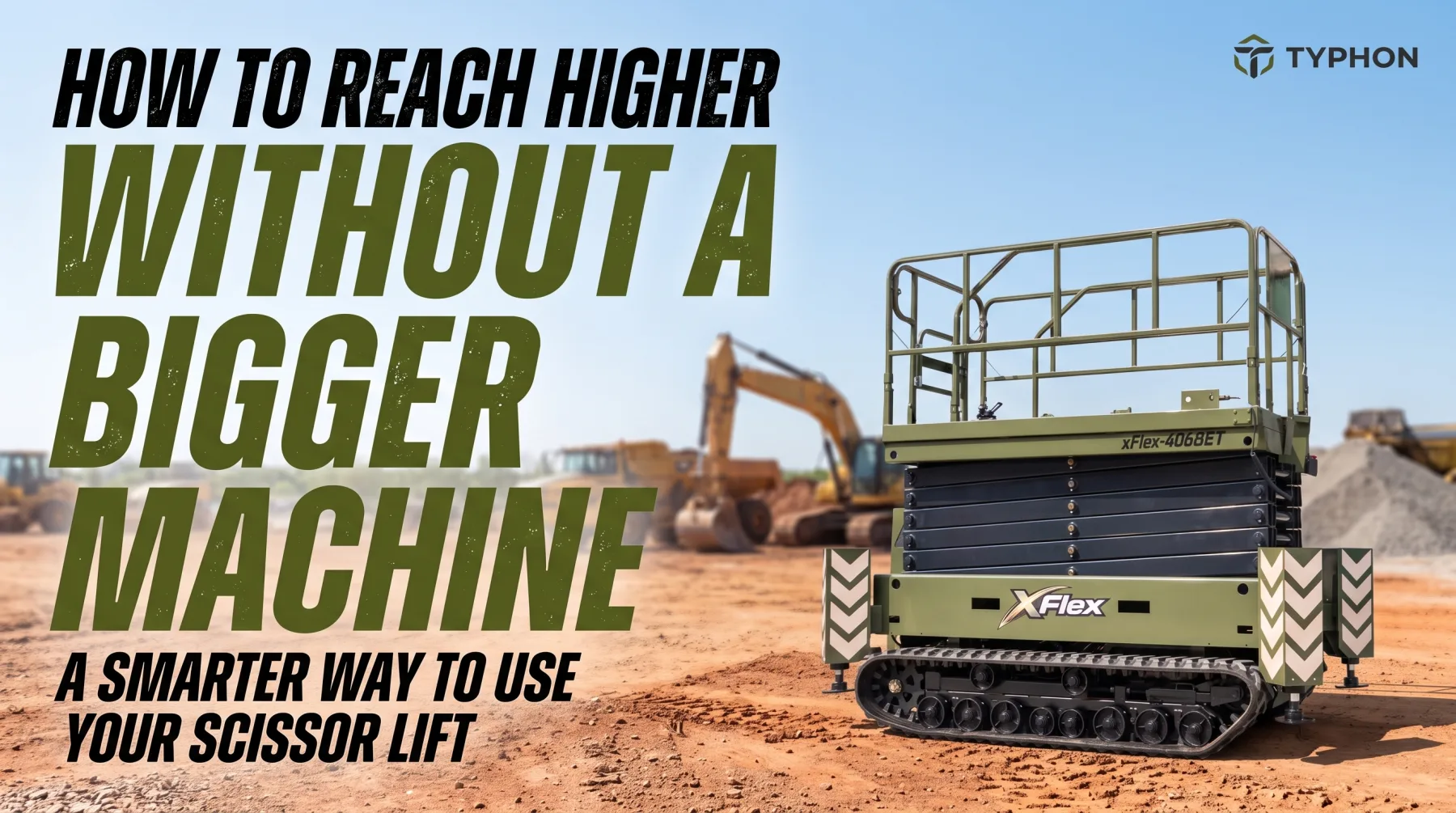
How to Reach Higher Without Choosing a Bigger Machine
An electrician sizes up a run of conduit near a 24-foot ceiling and reaches for the biggest scissor lift on the yard, figuring taller is safer. That machine is heavier, harder to move through doorways, and rents for more per day, all to gain reach he could have covered with a smarter setup on a mid-size unit. By the time he wrestles the oversized lift into position, he’s lost an hour and blocked half the aisle. That mismatch is the whole reason this question matters. Reaching higher isn’t always about a bigger scissor lift, it’s about using the right one well.
Getting more working height out of a machine comes down to understanding the numbers, picking the right scissor lift model, and using accessories, positioning, and safe leveling to close the gap. Do it right and you finish the job without paying for capacity you don’t need. This guide walks through platform versus working height, matching the scissor lift to the task, extending reach with deck extensions and accessories, smart operator positioning, and the tilt and leveling practices that keep every extra inch safe.
Choosing the right approach can improve both productivity and operating costs on indoor and outdoor projects alike. A properly sized scissor lift is easier to transport, maneuver, and position in confined work areas while still providing the height needed for maintenance, construction, and installation tasks. By understanding how to maximize the capabilities of the equipment you already have, you can complete overhead work more efficiently without sacrificing safety or investing in a larger machine than the job requires.
Start With Platform Height vs. Working Height
Before you rent a taller machine, understand the two numbers on the spec sheet, because most sizing mistakes start with mixing them up. Platform height is how high the deck itself rises. Working height adds roughly six feet to that number, the standard estimate for how far an average worker reaches while standing on the deck.
Here’s what that changes for you. A scissor lift rated at 20 feet of platform height gives you about 26 feet of working height, which means a task at 25 feet is already within range. Reach for a bigger scissor lift and you’re paying for height you’d never use. Always size the machine against the height of the actual work, then confirm which number the listing quotes before you spend a dollar.
Taking a few minutes to verify these measurements before renting or purchasing equipment can prevent unnecessary costs and improve job site efficiency. Selecting a lift based on the correct working height ensures the operator can comfortably reach the task without overextending or repositioning the machine more often than necessary. Understanding the difference between platform height and working height is one of the simplest ways to choose the right scissor lift for the job while maintaining safe operating practices.
Match the Scissor Lift Model to the Job
Picking the right model does more for your reach than jumping up a size class. Scissor lifts come in fairly predictable brackets, and each one suits a certain kind of work. A 19-to-26-foot electric unit covers most indoor tasks, from retail buildouts to standard warehouse ceilings, while staying narrow enough to slip through doorways and roll across finished floors. That smaller footprint often lets you position closer to the work, which effectively adds reach a bulkier machine can’t manage in tight quarters.
Where the job moves higher or outside, a rough terrain scissor lift in the 32-to-40-foot range takes over, built wider and heavier for stability on uneven ground. The key idea is fit, not size. A machine that squeezes into the right spot and sets up flush against the wall beats a taller one stuck fifteen feet back because it couldn’t get closer. Match the scissor lift to the space and surface first, then confirm it reaches the height your task actually demands.
The right machine also improves productivity by reducing setup time and unnecessary repositioning throughout the project. Choosing a scissor lift designed for the work environment—whether it’s a compact electric model for indoor maintenance or a rough-terrain unit for outdoor construction—helps operators move efficiently while maintaining safe access to elevated work areas. When the lift matches both the job site conditions and the required working height, crews can complete overhead tasks faster, more safely, and with less equipment-related downtime.
Extend Reach With Deck Extensions and Accessories
Most scissor lifts hide extra reach you may not be using. Roll-out deck extensions slide the platform outward several feet, letting you cover a wider work zone without repositioning the whole machine or renting a bigger one. On a job with scattered high points, that single feature can save dozens of setups and turn a mid-size scissor lift into a machine that reaches farther than its class suggests.
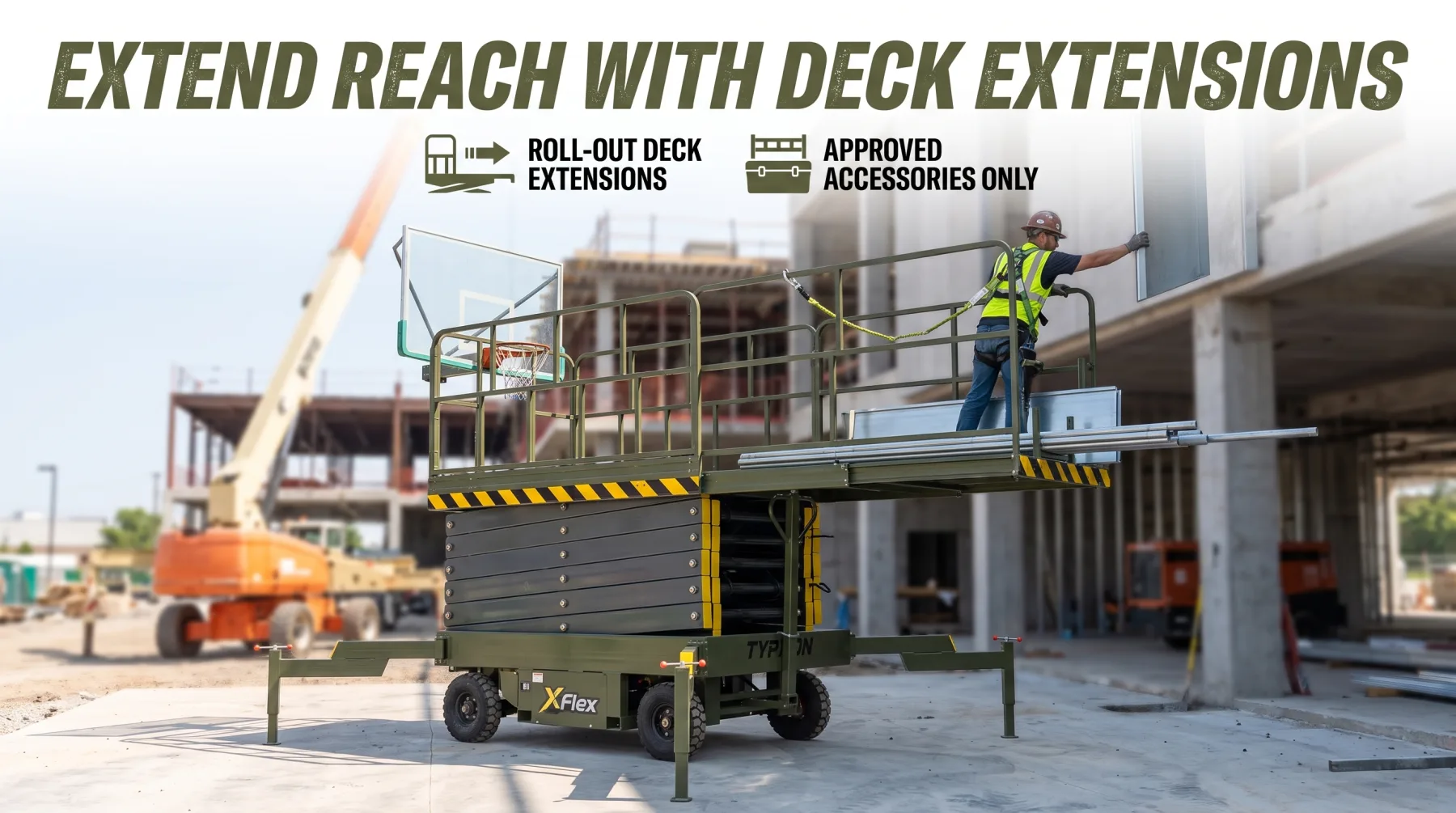
Accessories stretch the envelope further. Pipe racks, panel carriers, and tool trays keep material on the deck so the operator isn’t climbing down and back up, which protects both time and safe footing at height. Some models offer manufacturer-approved reach attachments that add controlled capability beyond the standard deck. Whatever you add, confirm it’s rated and approved for your specific scissor lift, since an unapproved extension changes the load and stability the machine was built around. Always review the manufacturer’s spec sheet before attaching anything to keep the setup within its rated limits.
Using these built-in features effectively can significantly improve productivity on jobs that require frequent overhead work. Deck extensions allow operators to access a larger work area from a single position, reducing unnecessary machine movement and saving valuable time. When paired with approved accessories that keep tools and materials within easy reach, a properly equipped scissor lift helps crews work more efficiently while maintaining the stability, load capacity, and safety standards the equipment was designed to provide.
Position the Operator for Maximum Reach
Where you park the scissor lift shapes how far a worker can reach, so treat positioning as part of the reach strategy. Set the machine as close to the work as the deck and guardrails allow, squaring it up to the surface rather than approaching at an angle. A few inches closer at the base translates into real reach at height, and it keeps the operator working with both hands instead of stretching over a rail.
Body position on the deck matters just as much. Workers should keep their feet on the platform floor and their weight centered, never standing on the mid-rail or a bucket to gain height, since that defeats the whole point of a stable platform and invites a fall. Plan the work so the highest tasks sit directly in front of or above the operator, not off to one awkward side. Smart positioning often closes the last foot or two of reach that would otherwise tempt someone toward a bigger machine.
Careful positioning also reduces the number of times the scissor lift needs to be moved, saving time while maintaining a safer work environment. Before raising the platform, operators should identify the best location that provides direct access to the work area without overreaching. A well-positioned lift allows tasks to be completed more efficiently, improves precision during installation or maintenance, and helps ensure the equipment is used within its intended operating limits.
Keep It Level and Manage Tilt Safely
Reaching higher is only worth it if the scissor lift stays stable, and that starts with the ground beneath it. These machines are built to elevate on firm, level surfaces, and most refuse to raise, or trigger a tilt alarm, once they sit past their rated slope. Rather than fighting that alarm, treat it as the machine protecting you, and reset the base before you climb.
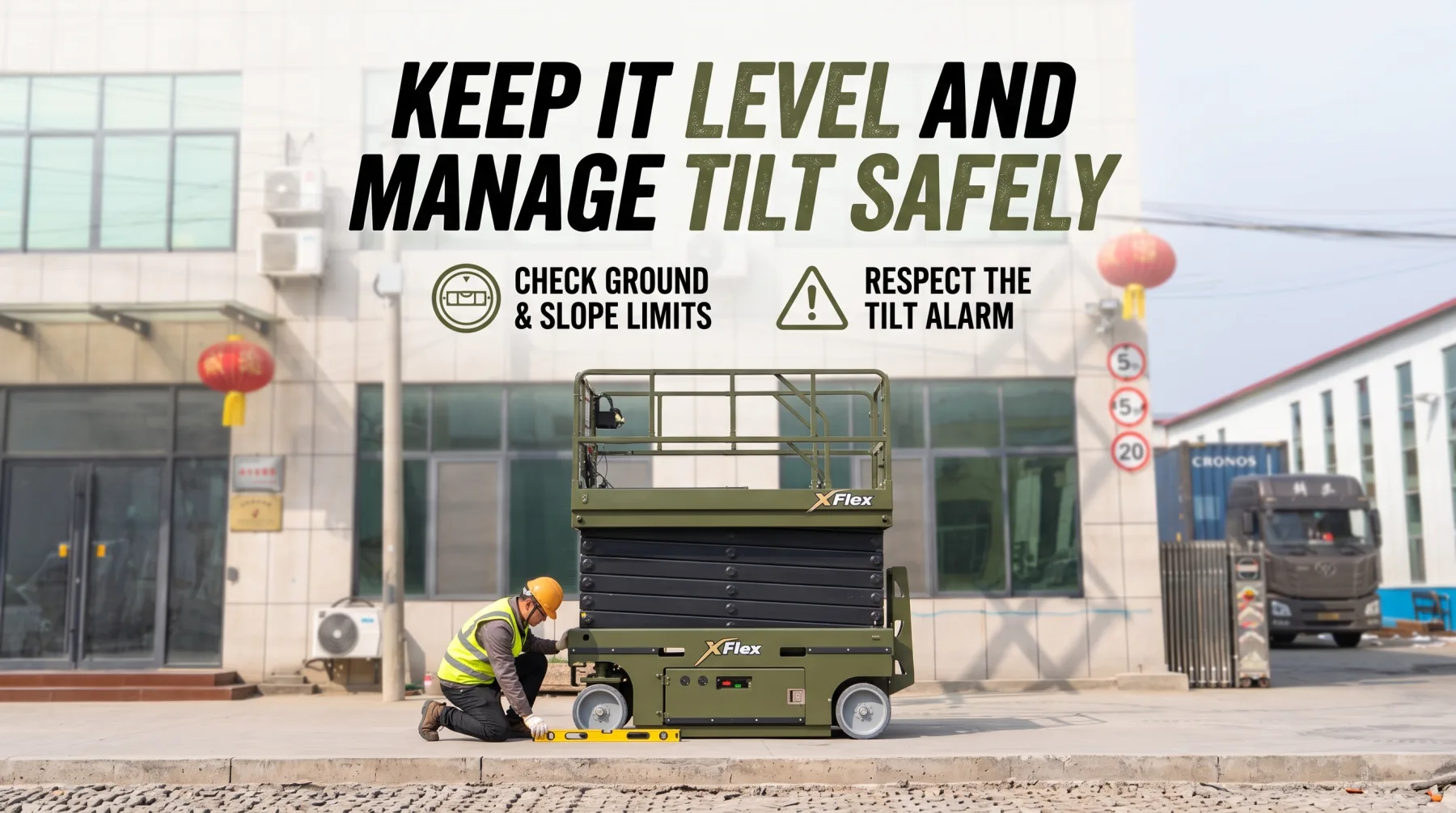
Firm footing is non-negotiable outdoors. Use the machine’s leveling features and stable ground rather than improvising with loose fill or blocking that shifts under load. Never raise a scissor lift on a slope beyond its rating, and never try to “make it work” on soft or uneven terrain, since the higher the platform climbs, the more a small tilt at the base becomes a big lean at the top. Follow the manufacturer’s slope and setup limits every time, and always pair them with safe fall-protection practices whenever the platform goes up. A level, well-placed machine gives you every inch of reach it was designed for, safely.
Performing a quick ground inspection before elevating the platform can prevent delays and reduce the risk of instability during operation. Check for soft soil, potholes, debris, or hidden obstacles that could affect the lift’s stability, especially on outdoor job sites. Taking the time to verify the surface conditions and reposition the scissor lift when needed helps protect both the operator and the equipment while ensuring overhead work can be completed safely and efficiently.
Conclusion
Reaching higher rarely requires a bigger machine, just a smarter approach to the one you have. Size the scissor lift against working height rather than platform height, so you account for a worker’s reach before ruling a model out. Pick the machine that fits the space, since a mid-size unit set close to the wall often out-reaches a taller one stuck across the room. Use deck extensions and approved accessories to stretch your coverage, position the operator squarely and safely on the deck, and keep the base firm and level so every extra inch stays stable. Get those habits right and you finish the job without paying for height you’ll never use. When you’re ready to match the right scissor lift to your next project, reach out to a trusted equipment specialist who can pair reliable equipment with the results your projects depend on.
Frequently Asked Questions
What’s the difference between platform height and working height on a scissor lift?
Platform height is how high the deck rises, while working height adds about six feet for a worker’s reach, so a 20-foot platform gives you roughly 26 feet of working height to plan against.
Can I add a deck extension to reach farther on a scissor lift?
Yes, many models offer roll-out deck extensions that slide the platform outward several feet, but always confirm the extension is rated and approved for your specific scissor lift before you use it.
Is it safe to stand on the rails to reach higher?
No. Standing on the guardrails or anything on the deck defeats the platform’s stability and risks a fall, so reposition the scissor lift closer instead and keep both feet flat on the platform floor.
