Construction sites are some of the toughest environments for any machine. Operators put their equipment through constant exposure to abrasive dust, heavy loads, and repeated impacts on every shift. To withstand these harsh conditions and deliver reliable performance, heavy machinery requires more than just a powerful engine—it demands careful, purpose-driven engineering.
When you invest in a fleet, you expect your machines to perform consistently for thousands of operating hours. Understanding how manufacturers design equipment for durability helps you make smarter purchasing decisions and better protect your valuable assets. The secret to exceptional reliability lies in the very structure of the machine itself.
In this guide, we’ll break down the engineering strategies that make heavy equipment last. You’ll learn how high-strength materials, intelligent structural design, and advanced stress-resistant components prevent premature failures and keep machines running safely under the harshest conditions. By grasping these core principles, you can maximize uptime, reduce repair costs, and get the highest return on your investment—ensuring your fleet is ready for any challenge on the job site.
The Foundation of Heavy Machinery Reliability
Every highly durable machine begins as a carefully calculated blueprint. Engineers must account for the specific physical forces a machine will encounter during its lifetime. An excavator digging through solid rock experiences entirely different stress profiles than a wheel loader carrying loose gravel.
To guarantee construction equipment durability, designers utilize advanced computer modeling and finite element analysis. This sophisticated software simulates years of harsh operation in a matter of hours. It allows engineers to identify weak points in a digital environment before a single piece of steel is ever cut.
This proactive approach to design ensures that every component serves a specific, calculated purpose. The goal is to build a machine that handles extreme physical punishment without transferring that destructive energy to the sensitive internal components. We achieve this through three primary engineering pillars: material strength, structural design, and stress resistance.
Material Strength: Building with the Best
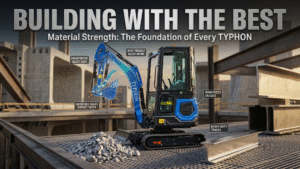
The physical materials used to construct a machine dictate its ultimate lifespan. Standard construction steel cannot withstand the constant friction and heavy impacts generated by earthmoving tasks. Therefore, manufacturers rely on highly specialized, premium metals to construct their equipment.
High-Tensile Steel and Alloys
The core frame and digging implements of heavy machinery rely heavily on high-tensile steel. This specially formulated metal undergoes rigorous heat-treating processes. The heat treatment changes the molecular structure of the steel, dramatically increasing its yield strength.
High-tensile steel can bend and flex under massive loads without suffering permanent deformation. When a loader bucket strikes a hidden boulder, the high-tensile steel absorbs the shock and returns to its original shape. Using advanced steel alloys allows manufacturers to build stronger, safer machines without adding unnecessary, fuel-draining weight to the chassis.
Wear-Resistant Components
Certain areas of a machine experience constant, aggressive friction. Bucket edges, bulldozer blades, and track shoes grind against abrasive sand and sharp rocks all day long. To protect these vulnerable areas, engineers utilize extreme wear-resistant steel plates.
These specialized wear plates feature an exceptionally high carbon content, making them significantly harder than the surrounding structural steel. They act as a sacrificial shield, absorbing the worst of the abrasive damage. When these plates eventually wear down, maintenance crews can cut them off and weld new plates into place, entirely preserving the original structure of the expensive attachment.
Structural Design: Engineering for Durability
Even the strongest steel will fail if you assemble it poorly. Structural design dictates how a machine distributes the immense physical loads it carries. Smart design guarantees that no single component bears the entire weight of a heavy lift.
Reinforcing High-Stress Zones
Engineers analyze where physical stress concentrates during operation. On an excavator, the points where the boom connects to the chassis and where the stick connects to the bucket endure massive twisting forces. To protect these critical joints, manufacturers utilize heavy-duty steel castings and thick reinforcement plates.
Cast steel components offer superior strength compared to fabricated, welded parts. By pouring molten steel into a specific mold, engineers create complex, highly durable shapes that seamlessly distribute stress. You will often find these massive steel castings at the pivot points of heavily loaded joints, ensuring the machine can lift maximum capacities without tearing the metal apart.
Distributing Weight and Force
A highly durable machine must maintain perfect physical balance. Uneven weight distribution places excessive strain on the undercarriage, axles, and tires. This imbalance leads to rapid component wear and creates dangerous tipping hazards for the operator.
Engineers design heavy machinery with carefully placed counterweights and a low center of gravity. When you load a machine to its maximum capacity, the structural design automatically channels that downward force evenly across the entire frame. This even distribution prevents stress fractures and keeps the equipment firmly planted on the ground.
Stress Resistance: Absorbing the Impact
Construction equipment durability relies on the machine’s ability to absorb and dissipate violent physical shocks. When an operator drops a heavy load or drives over deep ruts, the machine must manage that sudden spike in kinetic energy.
Advanced Welding Techniques
The welds holding a machine together are often the most vulnerable points on the entire structure. A weak weld will crack rapidly under continuous vibration. To prevent this, manufacturers employ advanced robotic welding systems.
Robotic welders provide flawless consistency, ensuring exact heat penetration and perfect bead placement on every single joint. Deep, consistent welds fuse the steel plates into a single, unified structure. This superior fusion drastically increases the machine’s overall stress resistance, eliminating the weak links associated with manual welding variations.
Vibration and Shock Absorption
Constant vibration destroys sensitive electronic sensors, cracks metal lines, and causes severe physical fatigue for the operator. Engineering for durability requires isolating these vibrations before they cause permanent damage.
Designers achieve this by mounting the engine, the hydraulic pumps, and the operator cab on heavy-duty, fluid-filled isolation mounts. These specialized rubber and fluid dampers act like massive shock absorbers. They capture the aggressive vibrations generated by the engine and the rough terrain, preventing them from traveling through the rigid steel frame.
Ensuring Long-Term Construction Equipment Durability
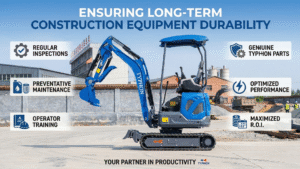
The commitment to heavy machinery reliability does not end at the design phase. Before any new model reaches a customer, it must pass a battery of relentless physical tests. These testing protocols ensure the engineering theories hold up to real-world abuse.
Rigorous Testing Protocols
Manufacturers push prototype machines well beyond their rated capacities. They subject the equipment to extreme temperature fluctuations, from freezing arctic conditions to blistering desert heat. Test operators run the machines continuously on specialized test tracks specifically designed to twist and strain the chassis to its breaking point.
By intentionally trying to destroy the prototypes, engineers identify any remaining structural weaknesses. They revise the design, reinforce the weak points, and test the machine again. This uncompromising dedication to quality control ensures that the final product will deliver decades of reliable service on your job site.
Conclusion
Construction equipment durability is not an accident; it is the direct result of brilliant, deliberate engineering. By leveraging exceptional material strength, intelligent structural design, and advanced stress resistance, manufacturers build heavy machinery capable of moving the earth reliably.
Understanding these engineering principles allows you to appreciate the true value of your equipment. It also highlights the absolute necessity of routine maintenance. Even the strongest high-tensile steel and robotic welds require proper lubrication and proactive inspections to function as designed.
Take a moment to review the structural health of your current fleet. Inspect your high-stress pivot points, check the integrity of your wear plates, and ensure your vibration mounts remain intact. By partnering expert engineering with a strict maintenance program, you guarantee maximum heavy machinery reliability and secure the long-term profitability of your business.