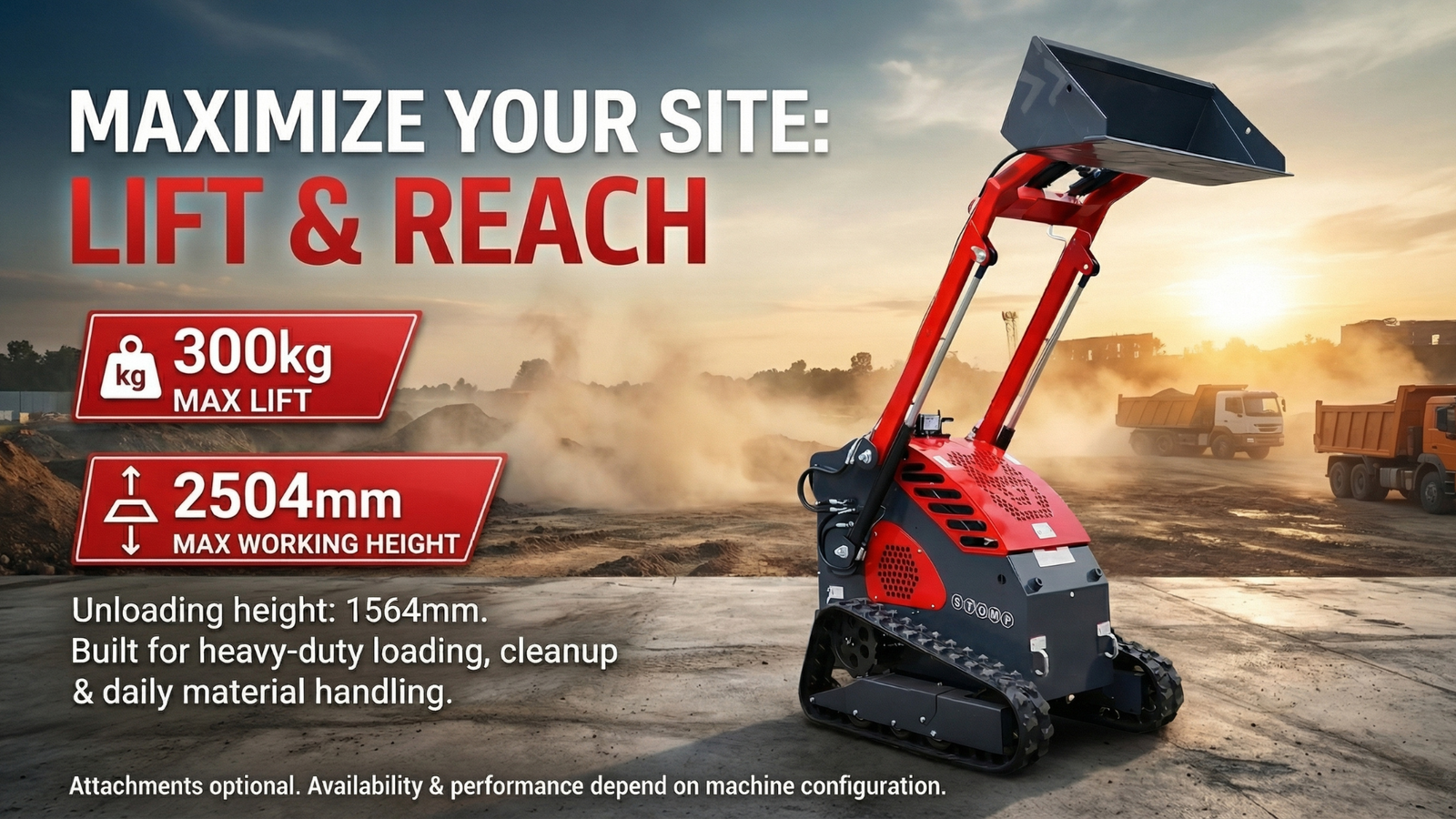
From Digging to Lifting: How One Machine Can Do It All
Managing a profitable job site means getting the most work out of the least amount of equipment. Every extra machine you transport to a location adds unnecessary fuel costs, maintenance requirements, and logistical headaches. Contractors constantly search for reliable solutions to streamline their operations without sacrificing capability. The answer to this operational challenge lies in maximizing the potential of a single, highly adaptable machine.
Skid steers have evolved far beyond simple dirt-pushing machines. Through modern engineering, they now serve as the central workhorse for countless industries. This guide explores the incredible scope of skid steer versatility and how it directly impacts your bottom line.
We will examine the mechanics of modern attachment systems and how they deliver specialized power. You will also discover real-world applications demonstrating how multi-purpose construction equipment easily replaces an entire fleet of single-use machines. By understanding these capabilities, you can make intelligent, cost-effective decisions for your business.
The Power of Skid Steer Versatility
When you invest in heavy machinery, you expect that equipment to work hard every single day. An idle machine drains your capital and slows down your overall growth. The core advantage of a skid steer is its fundamental design, which prioritizes adaptability over a single specialized function.
Redefining Multi-Purpose Construction Equipment
A standard skid steer consists of a robust chassis, a powerful diesel engine, and a highly capable hydraulic system. Without an attachment, the machine actually performs no work at all. This “blank canvas” approach to engineering is precisely what makes the equipment so valuable.
Instead of building a machine permanently dedicated to lifting or permanently dedicated to digging, manufacturers built a universal power delivery system. You dictate exactly what the machine does by changing the tool on the front. This transforms a compact loader into the ultimate piece of multi-purpose construction equipment.
Maximizing Return on Investment
Financial efficiency drives every successful contracting business. Purchasing five different machines for five different tasks requires massive capital. It also requires commercial hauling permits, multiple transport trailers, and a large storage yard.
Relying on skid steer versatility drastically reduces your overhead expenses. You purchase one premium base machine and a suite of task-specific tools. This strategy keeps your initial investment low while allowing you to bid on a massive variety of commercial and residential projects.
How Advanced Attachment Systems Work
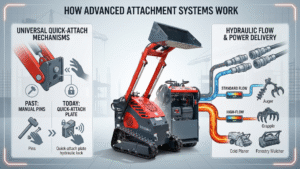
The true secret to this operational flexibility lies in the connection point between the machine and the tool. Modern attachment systems represent a massive leap forward in job site efficiency. They allow operators to transition between completely different phases of construction in a matter of minutes.
Universal Quick-Attach Mechanisms
In the past, changing a heavy equipment tool required driving metal pins out with a sledgehammer. It was a dangerous, exhausting process that operators actively avoided. Today, standardized quick-attach plates make tool changes virtually effortless.
The operator simply tilts the machine’s loader arms forward, drives into the attachment plate, and secures the locking wedges. Many modern loaders feature hydraulic quick-attach systems. This allows the operator to lock the tool in place with the push of a button inside the climate-controlled cab, completely eliminating manual labor from the process.
Hydraulic Flow and Power Delivery
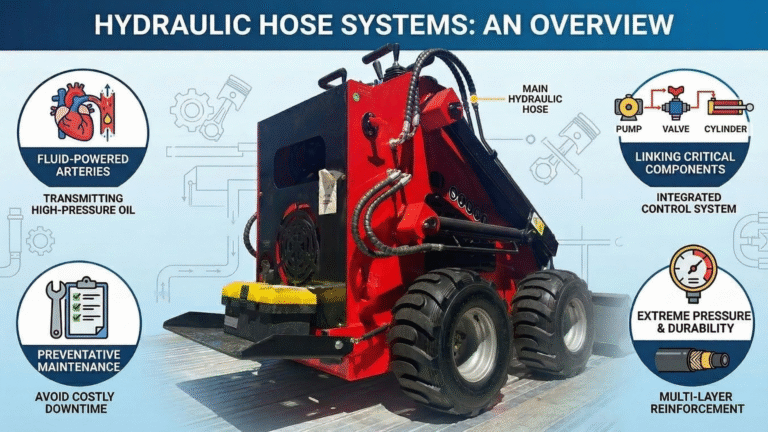
Physical connection is only half of the equation. To run heavy-duty rotary tools, the machine must deliver exceptional hydraulic power. High-quality attachment systems utilize flat-face hydraulic couplers to transfer pressurized fluid from the base machine directly into the tool’s internal motor.
Understanding your machine’s hydraulic flow is critical for optimal performance. Standard-flow machines easily run grapples, augers, and basic sweepers. However, high-flow systems push significantly more fluid per minute, allowing the loader to power demanding attachments like cold planers and forestry mulchers without stalling.
Real-World Applications for Every Industry
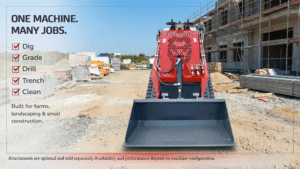
The ability to swap tools rapidly opens doors across multiple sectors. Contractors who previously specialized in a single trade can now expand their service offerings. Here are just a few ways professionals utilize this versatility in the field.
Earthmoving and Site Preparation
Site preparation remains the bread and butter of compact equipment. Using a standard heavy-duty bucket, operators can cut grades, move gravel, and load dump trucks rapidly. However, the work rarely stops at basic digging.
By attaching a hydraulic soil conditioner, the operator can pulverize hard dirt clods and prep the ground perfectly for fresh sod. Switching to a trencher attachment allows the exact same operator to slice perfectly straight channels for underground irrigation lines or electrical conduits. One machine handles the entire earthmoving phase from start to finish.
Material Handling and Lifting
Construction sites require constant movement of heavy materials. Relying on manual labor to move pallets of brick or stacks of lumber is dangerous and incredibly slow. With a simple set of pallet forks, your loader instantly transforms into a highly capable rough-terrain forklift.
The compact nature of the machine allows it to carry heavy loads through narrow residential gates or tight warehouse aisles. Operators can easily lift materials over foundation walls or place heavy hardscape blocks precisely where the masonry crew needs them. This mechanized lifting protects your workers from severe back injuries and accelerates your project timeline.
Demolition and Land Clearing
Demolition work requires brute force and specialized handling. A skid steer equipped with a hydraulic concrete breaker easily shatters old driveways, foundational walls, and commercial concrete slabs. The intense hydraulic pressure does the exhausting work of a dozen laborers wielding jackhammers.
Once the concrete breaks apart, the operator drops the breaker and attaches a heavy-duty grapple bucket. The grapple securely clamps down on uneven chunks of debris, twisted rebar, and fallen tree limbs. The operator then loads the dangerous debris directly into a roll-off dumpster, leaving the site completely safe and ready for the next phase of construction.
Replacing Specialized Machines
Every single-purpose machine you eliminate from your fleet represents a significant financial victory. While specialized machines certainly have their place on massive, multi-year infrastructure projects, they are rarely necessary for standard commercial or residential contracting.
Reducing Fleet Size Safely
Consider the standard ride-on trencher. It is an excellent machine, but it only cuts trenches. When the trenching is done, the machine sits idle. By purchasing a trencher attachment instead, you eliminate an entire engine and drive system from your maintenance schedule.
This philosophy applies to dozens of tools. You can replace dedicated street sweepers with broom attachments. You can replace massive stump grinders with compact stump grinding attachments. Consolidating your capabilities into a single prime mover keeps your fleet lean, aggressive, and highly profitable.
Streamlining Maintenance and Transport
A smaller fleet directly translates into lower preventative maintenance costs. You only have to change the engine oil, air filters, and hydraulic fluid on one prime mover. This consolidation saves you thousands of dollars in routine service parts every single year.
Transportation also becomes remarkably simple. You can tow a compact loader and a trailer full of attachments using a standard heavy-duty pickup truck. Your crew arrives at the job site fully equipped to handle digging, lifting, grading, and demolition without waiting for multiple commercial delivery trucks to arrive.
Conclusion
The evolution of multi-purpose construction equipment has forever changed how contractors approach their daily work. From digging foundational trenches to lifting heavy pallets of stone, skid steer versatility ensures you always have the right tool for the job. By leveraging advanced attachment systems, you protect your capital and maximize your daily productivity.
Do not let single-purpose machines drain your equipment budget. A well-equipped compact loader empowers your crew to work safer, faster, and more efficiently. It provides the reliable, professional performance your clients expect while keeping your overhead expenses firmly under control.
Take a comprehensive look at your current equipment inventory this week. Identify the specialized machines that spend most of their time parked in your storage yard. Consider selling those idle assets and investing the capital into high-quality attachments that will keep your primary loader working profitably all year long.