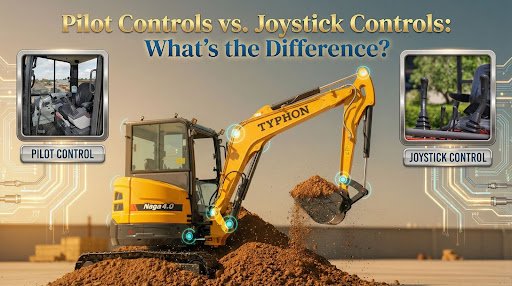
Hydraulic Joystick Control (Pilot Control) vs Mechanical Joystick Control
When you climb into the cab of a modern excavator, skid steer, or backhoe, the first thing your hands find are the control levers. These sticks are your direct line of communication with the machine—every subtle movement translates into thousands of pounds of hydraulic force ripping through the earth. However, not all heavy equipment controls are created equal.
At first glance, the difference might seem negligible: you push the stick forward, and the boom goes down. But beneath the rubber boots lies a distinct divide between traditional mechanical joysticks and modern pilot controls. These underlying engineering differences drastically affect machine performance, precision, and operator fatigue. Whether you are a fleet manager buying your next machine or an operator wondering why one excavator feels so much smoother than another, understanding the mechanics behind the motion is crucial. This guide explores the technical and practical differences between pilot and mechanical controls, helping you decide which system is right for your fleet.
Understanding Mechanical Joystick Controls
To understand the evolution of heavy equipment, we have to look at where we started. Mechanical joystick controls, often just called “manual controls,” rely on a direct physical connection between your hand and the hydraulic valve. When you move the lever, you are pushing or pulling a series of metal linkages, rods, or cables that physically open and close the main hydraulic spool valve.
Think of it like the gas pedal in an older car. When you press the pedal, a cable physically pulls the throttle body open. There is no computer or fluid in between; just a mechanical link. This design has been the standard for decades and is still common in smaller, economy-focused machines or older utility tractors.
The Benefits of Mechanical Simplicity
The biggest advantage of mechanical controls is their simplicity. Because they rely on physical linkages, there are fewer complex components to fail. You don’t have to worry about pilot filters, auxiliary pumps, or low-pressure hydraulic lines leaking inside the cab. If a linkage breaks or a pin wears out, it is usually a visible problem that a mechanic can fix with basic hand tools and a welder. This makes them attractive for operators in remote areas where high-tech parts availability is scarce.
Cost is another significant factor. Manufacturing a machine with mechanical linkages is generally cheaper than outfitting it with a pilot hydraulic system. This lower production cost often translates to a lower sticker price for the buyer, making mechanical controls a common feature in entry-level mini excavators and backhoes.
The Downside: Physical Effort and Fatigue
The drawback of this direct connection is weight. When you move a mechanical lever, you are physically fighting the resistance of the return springs inside the main hydraulic valve. You are also fighting friction in the linkages and pivots. While this might not feel heavy for the first few minutes, doing it thousands of times over an eight-hour shift takes a toll.
Operators using mechanical controls often report higher levels of wrist and arm fatigue. The movements require more physical force, which can lead to repetitive strain injuries over time. Furthermore, as the linkages wear, “slop” or play develops in the controls. You might have to move the stick an inch before the valve actually engages, making precise work—like grading or digging around utilities—much more difficult.
The Rise of Pilot Controls
Pilot controls represent the modern standard for professional-grade heavy equipment. Instead of a physical linkage connecting your hand to the main valve, pilot controls use low-pressure hydraulic fluid to do the work. When you move the joystick, you aren’t opening the main valve directly. You are opening a small “pilot” valve that sends a stream of hydraulic fluid to the main spool. This fluid pressure pushes the main valve open.
It is essentially hydraulic power steering for your excavator. Your hand provides the input, and the hydraulic system provides the muscle.
Unmatched Precision and Smoothness
The defining characteristic of pilot controls is their feather-light touch. Because you aren’t fighting heavy springs or rusty cables, the joystick moves with minimal effort. You can operate a 50-ton excavator with just your fingertips. This lack of physical resistance allows for incredibly subtle movements. If you need to shave half an inch of dirt off a trench bottom, pilot controls give you the tactile feedback and fine control to do it consistently.
This smoothness extends to multifunction operations. In a mechanical system, pulling two levers at once (like lifting the boom while curling the bucket) can feel clunky as the linkages fight for position. In a pilot system, the hydraulic fluid flows seamlessly, allowing for fluid, blended movements that make the machine feel like an extension of your own arm.
Reducing Operator Fatigue
For professional contractors who spend their lives in the cab, pilot controls are a game-changer for comfort. The reduced effort means less strain on the shoulders, elbows, and wrists. An operator who isn’t fighting the machine is an operator who stays alert and productive longer.
Most pilot control systems are also mounted in ergonomic pods alongside the seat, rather than being fixed floor levers. This allows the controls to move with the suspension seat, preventing the operator from having to reach forward constantly as the machine bounces over rough terrain. This ergonomic advantage is a major reason why pilot controls have become the industry preference for medium to large equipment.
Maintenance and Reliability Comparison
While pilot controls deliver undeniable performance benefits, they do introduce a layer of complexity. A pilot system requires its own hydraulic pump (or a dedicated stage of the main pump), a pilot filter, and a network of small hydraulic lines routed directly into the cab joysticks. From a maintenance perspective, this means more potential leak points—and a blown pilot hose inside the cab can be a messy, frustrating repair. Furthermore, pilot systems are highly sensitive to contamination. Dirty hydraulic fluid can easily clog the tiny orifices in the pilot valves, causing controls to become sluggish or unresponsive. Strict adherence to filter change intervals and routine fluid sampling is non-negotiable for keeping a pilot system healthy.
Mechanical controls, on the other hand, are much more forgiving of neglect. While they might grow stiff or sloppy over time, they rarely suffer complete failure without warning. However, keeping them operational requires its own kind of upkeep; you will spend plenty of time greasing pivot points and adjusting turnbuckles to eliminate play.
Which System Is Right for You?
The choice between pilot and joystick (mechanical) controls ultimately comes down to your application and budget.
Choose Mechanical Controls If:
- You are buying an entry-level machine for occasional use.
- You operate in a remote environment where simplicity and ease of repair are paramount.
- You are on a strict budget and need the lowest possible acquisition cost.
- You prefer the “heavy” feedback of direct linkage for certain aggressive applications.
Choose Pilot Controls If:
- You are a professional operator working eight hours a day or more.
- Your work requires high precision, such as final grading, pipe laying, or working around existing structures.
- You want to maximize resale value, as most buyers now expect pilot controls.
- You want to reduce operator fatigue and improve job site safety through better control.
Conclusion
The evolution from mechanical linkages to pilot hydraulics marks a significant step forward in heavy equipment design. While mechanical controls still have a place in the market due to their rugged simplicity and low cost, pilot controls have become the gold standard for productivity.
They bridge the gap between man and machine, removing the physical barrier of heavy levers and replacing it with fluid precision. For a business owner, the investment in pilot controls often pays for itself through increased operator efficiency and the ability to tackle more delicate, high-value tasks. When you are looking for your next machine, sit in the seat and feel the difference for yourself. Your wrists—and your grade checker—will thank you.