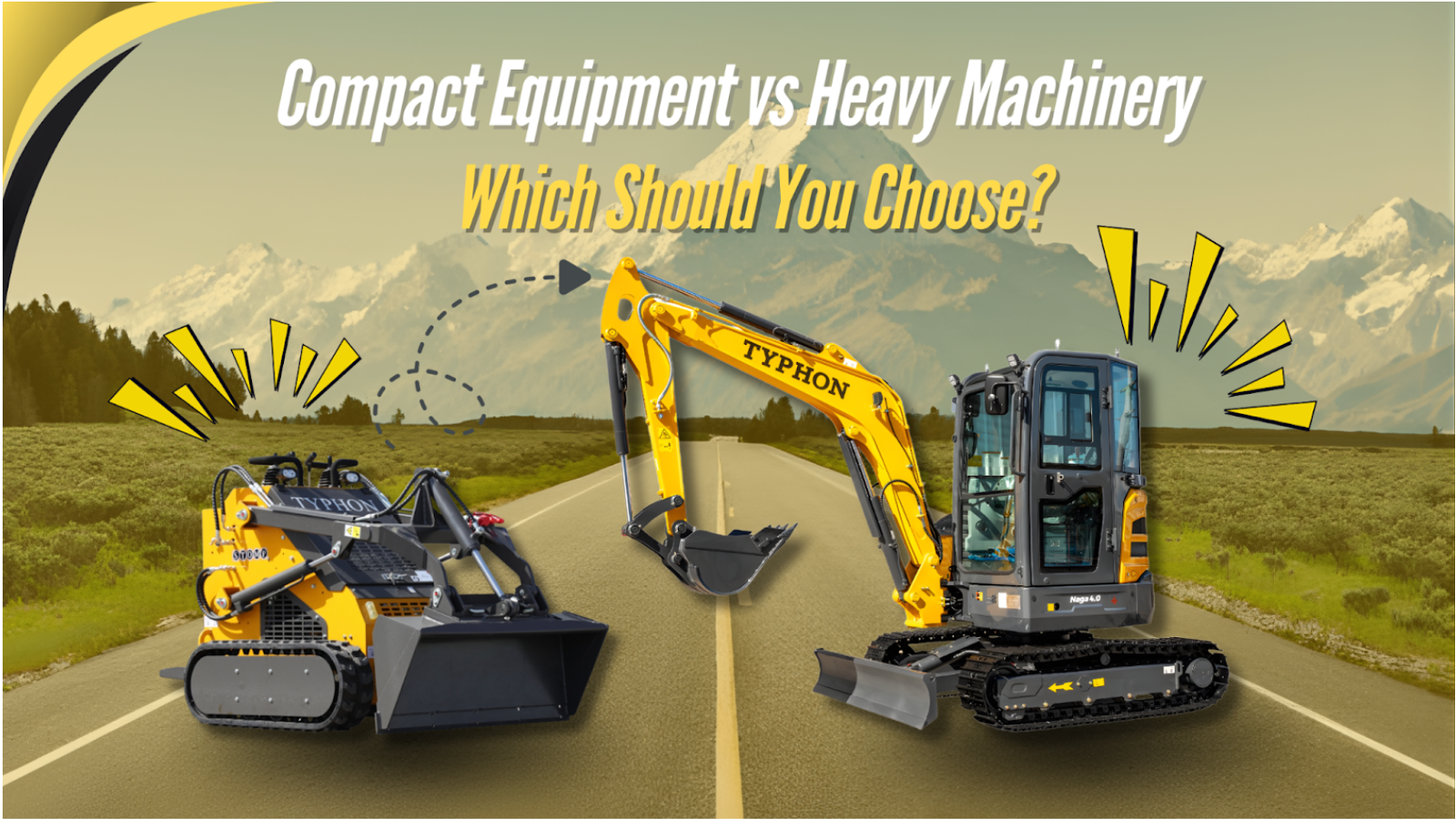
Compact Equipment vs Heavy Machinery: Which Should You Choose?
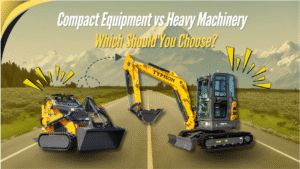
In the construction and landscaping industries, selecting the right tools for the job is often the difference between profit and loss. One of the most common dilemmas project managers and business owners face is deciding between compact equipment and heavy machinery. While a massive excavator might seem impressive, it is often overkill—and sometimes a liability—for smaller, residential projects. Conversely, a mini skid steer will struggle to keep up with the demands of a major highway expansion.
Understanding the specific capabilities, limitations, and best use cases for both categories is essential. This guide provides a comprehensive overview of compact equipment vs. heavy machinery, focusing on key players like mini excavators and mini skid steers, to help you determine which asset belongs in your fleet.
The Rise of Compact Equipment
Compact equipment has seen a surge in popularity over the last two decades. As urban environments become denser and job sites more confined, the need for powerful yet small-footprint machinery has grown.
Defining Compact Equipment
Compact equipment generally refers to machines designed for maneuverability, ease of transport, and operation in tight quarters. The most common examples include:
- Mini Excavators: These track-mounted diggers typically weigh under six tons. They offer surprising breakout force and dig depth while being small enough to pass through backyard gates or work alongside active traffic lanes.
- Mini Skid Steers (Compact Utility Loaders): These stand-on or walk-behind machines are even smaller than standard skid steers. They are champions of versatility, capable of running dozens of attachments from trenchers to soil cultivators.
- Compact Track Loaders: Similar to skid steers but with tracks, offering lower ground pressure and better stability on soft terrain.
The Advantage of Convenience and Access
The main advantage of compact equipment is accessibility. A mini excavator can operate inside buildings for demolition or navigate tight alleyways where larger machinery cannot fit.
For residential contractors, this compact size is a game-changer. Transporting a mini skid steer usually only requires a standard pickup and trailer, cutting logistics costs and enabling quick deployment across multiple sites in a single day. Additionally, modern compact machines feature intuitive controls, making them easier for new operators to learn compared to the complex systems on full-sized earthmovers.
Lower Impact on Surroundings
Another critical factor is ground disturbance. Heavy machinery exerts tremendous pressure on the ground, potentially damaging driveways, sidewalks, and established landscaping. Compact equipment, particularly that with rubber tracks, is designed to tread lightly. A mini skid steer can carry materials across a manicured lawn with minimal turf damage, saving contractors time and money on site restoration.
The Power of Heavy Machinery
While compact equipment wins on versatility and access, heavy machinery dominates when it comes to raw power and volume.
Defining Heavy Machinery
Heavy machinery includes full-size excavators, large wheel loaders, bulldozers, and motor graders. These machines are built for mass excavation, major infrastructure projects, and mining operations. They are engineered to move thousands of cubic yards of material efficiently and continuously.
Efficiency in Large-Scale Projects
If your project involves digging a foundation for a skyscraper, clearing acres of forest, or building a new road, compact equipment will not suffice. The bucket capacity of a standard 20-ton excavator is exponentially larger than that of a mini excavator. What might take a mini excavator all day to dig, a heavy machine can complete in less than an hour.
In these scenarios, speed is the metric of success. The high breakout force, long reach, and lifting capacity of heavy machinery allow operators to handle heavy rocks, deep trenches, and massive stockpiles that would stall or tip a smaller machine.
Durability for Continuous Duty
Heavy machinery is built with heavier gauge steel and larger components designed for continuous, high-stress operation. They are less stressed by hard digging conditions compared to compact models, which can suffer from overheating or structural fatigue if pushed beyond their limits for extended periods.
Key Comparison: Operational Differences
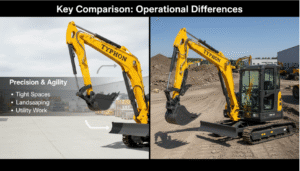
To choose the right equipment, you must compare them across several operational categories.
1. Workspace Constraints
- Compact: Ideal for “tight” spaces—backyards, interiors, narrow urban streets, and between existing structures. The zero-tail swing feature on many mini excavators allows the cab to rotate without hitting obstacles.
- Heavy: Requires significant clearance. These machines need a wide swing radius and ample room to maneuver. They are best suited for open fields, large commercial lots, or new development sites.
2. Transport and Logistics
- Compact: Easy and cheap to move. It can often be towed by a standard heavy-duty pickup. No special permits required.
- Heavy: Requires dedicated haulers (lowboys), semi-trucks, and often oversize load permits and escort vehicles. Mobilization costs are high, making them impractical for short-duration jobs.
3. Cost of Ownership and Operation
- Compact: Lower purchase price, lower fuel consumption, and less expensive parts. Maintenance is generally easier and cheaper.
- Heavy: High capital investment. Fuel consumption is significant, and repairs—especially to hydraulics or undercarriage—can be very costly.
4. Versatility vs. Specialization
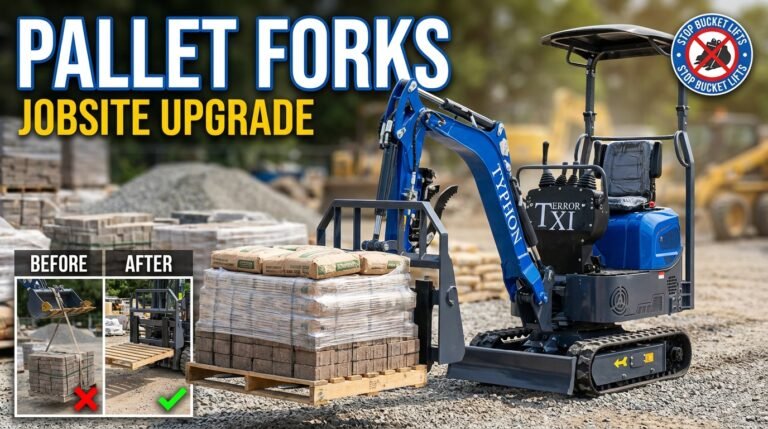
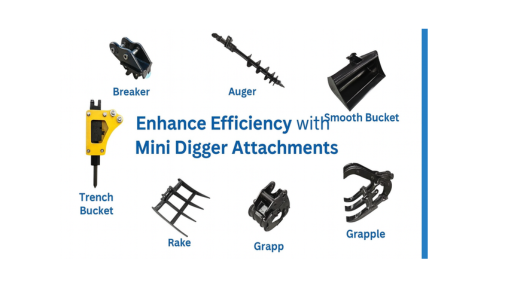
- Compact: Highly versatile. A mini skid steer serves as a Swiss Army knife, switching from a bucket to an auger to a pallet fork in minutes.
- Heavy: Often more specialized. While they can use attachments, a large bulldozer or grader is typically kept on-site for one specific, high-volume task.
Making the Decision for Your Business
The choice between compact and heavy machinery is rarely about which machine is “better” in a vacuum; it is about which machine fits your business model.
Choose Compact Equipment if:
- You work primarily in residential or urban areas.
- You need to minimize damage to existing surfaces.
- Your projects involve detailed tasks like trenching for utilities, pool installation, or landscape design.
- You need equipment that is easy to transport between multiple small jobs.
Choose Heavy Machinery if:
- You are bidding on large commercial or civil infrastructure projects.
- The job requires moving massive volumes of earth quickly.
- You have the logistical infrastructure to transport and maintain large units.
- You have ample space on site for maneuvering.
Conclusion
In the modern construction landscape, the line between compact and heavy performance is blurring, with larger mini excavators offering impressive power. However, the fundamental distinction remains: Compact equipment offers precision and access, while heavy machinery offers volume and speed.
By carefully assessing your typical job-site conditions and project scope, you can invest in machinery that maximizes your efficiency. Whether it’s the nimble agility of a mini skid steer or the brute force of a large excavator, the right choice will drive your business forward.