
How Dumpers Move Soil, Rock, and Construction Materials
Moving excavated soil, gravel, broken rock, and other materials across a construction site requires a machine that can repeatedly carry loads between different work areas. Once material starts accumulating around a new commercial pad, the crew needs a practical way to move it to stockpiles, fill areas, sub-base sections, or disposal points. A dumper fills that role by combining a load-carrying body, drive system, and dumping mechanism into one machine designed for repeated material transport.
Compact dimensions make a noticeable difference when hauling routes pass through tight work areas. A smaller layout can help the dumper access locations where larger hauling trucks may have difficulty turning or fitting between structures and equipment. The ability to carry a load, travel across the site, and discharge material at the destination keeps the movement cycle connected to the rest of the construction work.
Across busy jobsites, reliable material flow can help prevent excavated soil and other loads from becoming a bottleneck. Operators can pick up material, travel to the required location, and use the dumping mechanism to place the load before returning for another cycle. This combination of mobility, carrying capacity, and controlled dumping makes a dumper useful for construction sites where space and access are limited.
Carrying Loose Materials
A dumper is built around one core task: carrying loose materials from where they are to where they’re needed. Soil, gravel, sand, crushed rock, and construction debris all move constantly during site preparation and earthwork, and rarely stay put where they first land. The load body gives these materials a dedicated space, keeping them contained through transport rather than scattered across the site.
That focus on loose material is what sets a dumper apart from other equipment. Where an excavator digs and a loader scoops, the dumper’s job is the haul in between, taking a full load and delivering it intact. On an active earthwork site, that steady movement of bulk material is often what keeps every other operation on schedule.
Key takeaway: A dumper’s load body is purpose-built to carry loose materials such as soil, gravel, sand, crushed rock, and debris between work areas during site preparation and earthwork.
Loading the Dumper
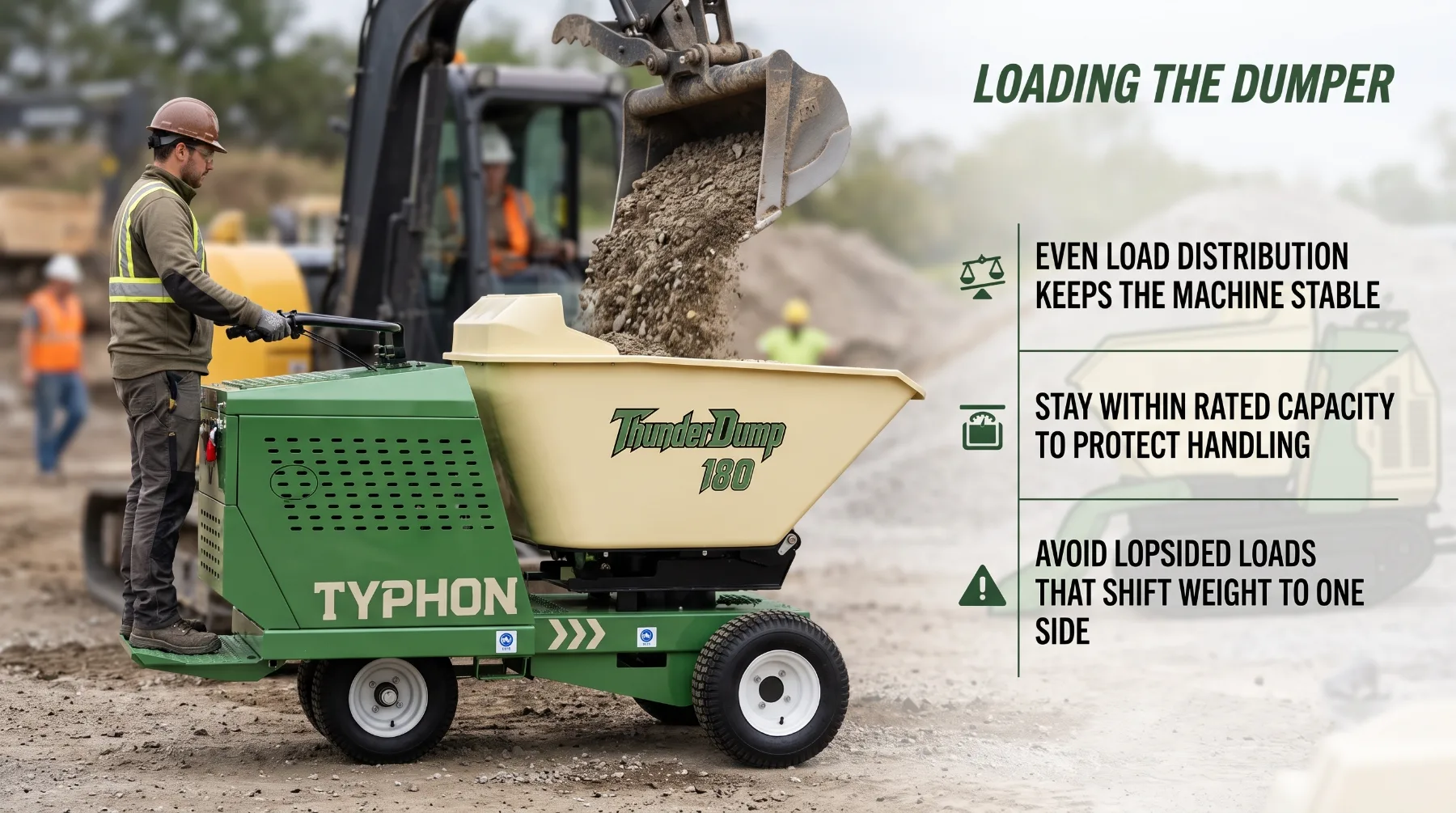
Loading is where a productive cycle begins, and it’s usually handled by an excavator, loader, or other suitable equipment placing material into the body. How that material sits in the body matters as much as how much goes in. Keeping the load distributed evenly across the body helps maintain balance during travel, which keeps the machine stable and predictable on the move.
Two rules keep loading safe and effective. First, stay within the machine’s rated capacity, since overloading strains the equipment and undermines handling. Second, avoid piling material in a way that creates an unstable or uneven load, because a lopsided load shifts weight to one side and affects control. A few extra seconds spent loading the body evenly pays off through the entire haul.
Key takeaway: Load the dumper evenly across the body, stay within its rated capacity, and avoid uneven or unstable loads that compromise balance during travel.
Traveling Across the Jobsite
Once loaded, the dumper carries its material along designated site routes to the destination. Construction surfaces are rarely smooth, so several machine characteristics come into play here. Traction, ground clearance, steering response, and overall machine dimensions all influence how well the dumper handles rough, uneven ground with a load on board.
The operator’s technique matters just as much as the machine. Speed and driving approach should adjust to the conditions at hand: terrain, visibility, slope, and the weight and type of load. A loaded dumper behaves differently from an empty one, carrying more momentum and sitting lower, so easing back on speed over rough or sloped ground keeps it stable and under control. Reading the route ahead and driving to suit it is what makes each haul safe and consistent.
Key takeaway: Traction, ground clearance, steering, and machine dimensions affect how a dumper handles site surfaces, so operators must adjust speed and technique to terrain, visibility, slope, and load.
Moving Soil and Rock
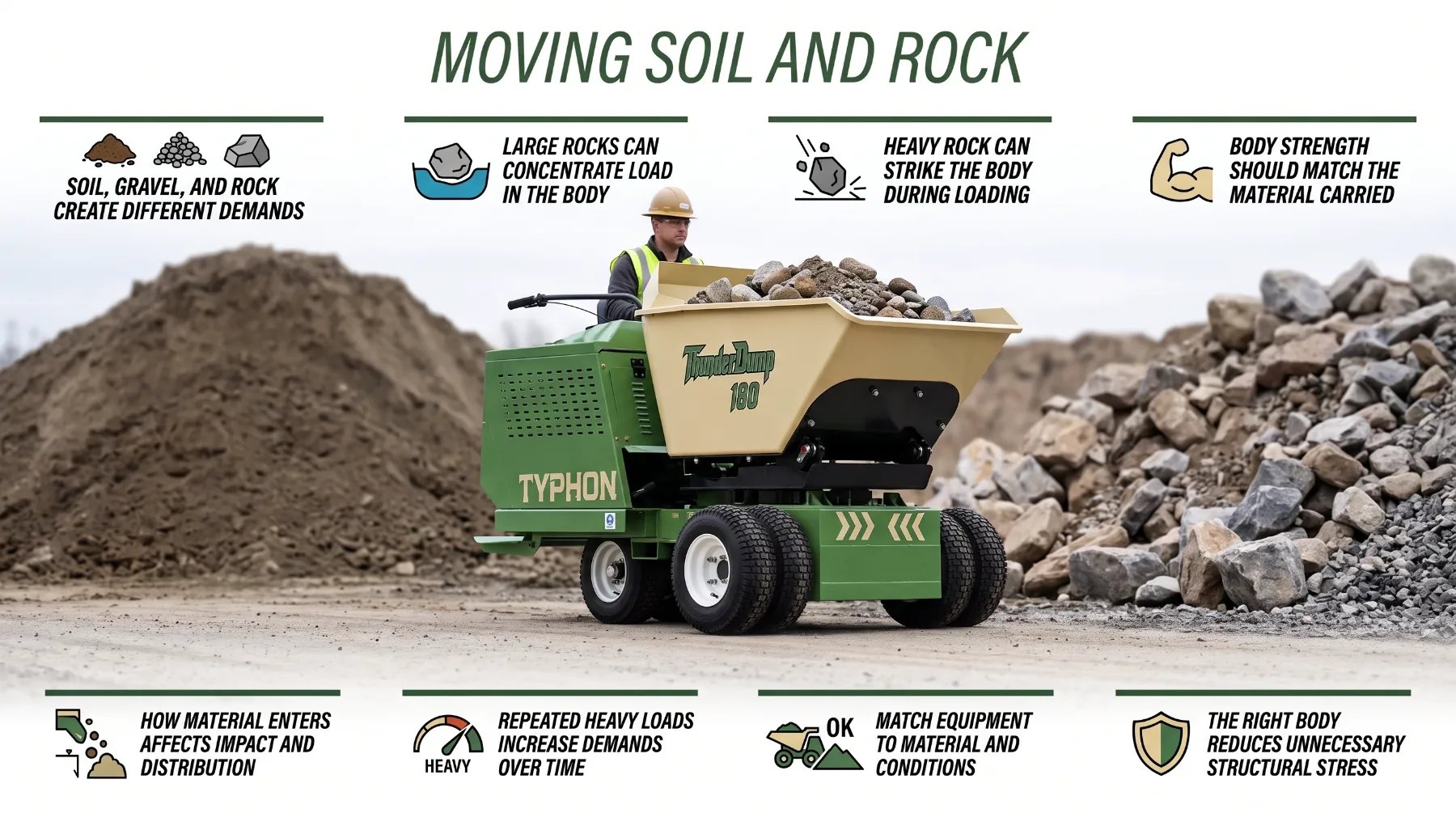
Different materials place different demands on a dumper. Soil is generally easier to load and unload because it flows more evenly through the body, while large rocks can create concentrated loads and strong impacts during loading. These differences affect how the dumper’s body and structure need to handle the material throughout the work cycle.
Choosing a machine suited to the material being transported helps maintain reliable operation. A body designed to handle heavy rock and repeated impact is better suited to demanding loads than one intended mainly for lighter materials. Understanding the material, loading conditions, and expected workload before operation helps protect the equipment while supporting consistent productivity.
- Material Type: Soil, gravel, and rock create different loading and handling demands.
- Load Distribution: Large rocks can create concentrated loads in specific areas of the body.
- Impact Resistance: Heavy rock may strike the load body during loading and unloading.
- Body Strength: The structure should be suited to the weight and characteristics of the material being carried.
- Loading Conditions: The way material enters the body can affect impact and load distribution.
- Workload: Repeated heavy loads place greater demands on the dumper over time.
- Application Match: Selecting equipment based on the material and working conditions supports more reliable operation.
- Equipment Protection: A suitable load body helps reduce unnecessary structural stress while maintaining productivity.
Key takeaway: Different materials create different demands, with soil loading easily and larger rocks creating concentrated loads and impact, so the dumper’s body and structure should suit the expected materials.
Dumping at the Work Area
The payoff of the whole cycle is the dumper’s ability to unload material precisely where it’s needed. The dump body raises so gravity carries the load out of the machine, discharging it at the destination without manual unloading. That simple, efficient action is the machine’s defining advantage.
This quick, controlled discharge speeds up a range of common tasks. Backfilling a trench, building a stockpile, prepping ground for grading, and generally moving material around a site all move faster when a dumper can deliver and release its load in one motion. Placing material accurately at the point of use also reduces the rehandling that eats into a crew’s time, keeping the operation lean.
Key takeaway: A dumper unloads by raising its body so gravity discharges the material, speeding up backfilling, stockpiling, grading preparation, and general material movement.
Working on Uneven Ground
Construction sites almost never offer perfectly smooth travel surfaces, and that reality shapes how a dumper is run. Mud, loose soil, gravel, slopes, and uneven terrain can all affect stability, traction, and control, especially with a full load raising the machine’s center of demand.
Handling these conditions comes down to judgment. Operators need to weigh the ground conditions before and during each haul, then maintain travel speeds suited to what the surface allows. On soft or slippery ground, a steep slope, or broken terrain, a measured pace keeps the loaded machine stable and predictable. Pushing speed on poor ground invites loss of control, so reading conditions and adjusting to them is a core operating skill, not an optional one.
Key takeaway: Mud, loose soil, gravel, slopes, and uneven terrain all affect dumper operation, so operators must weigh ground conditions and hold suitable travel speeds to keep the loaded machine stable.
Repeating the Hauling Cycle
A dumper’s real value shows over the full cycle: load, travel, dump, and return, repeated again and again through the day. Productivity depends on how smoothly that loop runs, because time lost on any single step multiplies across dozens of cycles. The goal is a rhythm where the machine spends its time moving material rather than waiting.
Two factors do the most to tighten the cycle. Shorter travel distances between the loading point and the dump area cut the time each round takes, and well-placed, efficient loading points reduce the waiting between loads. When the loading equipment and the dumper stay in sync, material keeps moving steadily. Running the cycle efficiently keeps the dumper feeding the rest of the operation, so excavators, graders, and crews aren’t left idle waiting on material.
Key takeaway: Dumper productivity depends on the full load, travel, dump, and return cycle, so shorter travel distances and efficient loading points reduce waiting and keep material moving.
Conclusion
Dumpers transport soil, rock, gravel, sand, and other loose materials between loading, processing, placement, and stockpile areas across a jobsite. The load body provides the carrying capacity, while the hydraulic or mechanical tipping system raises the body to discharge material efficiently at the destination. Payload should be distributed evenly and kept within the machine’s rated capacity, while travel speed should be adjusted for ground condition, slope, traction, visibility, and load weight. Material characteristics also affect operation because dense rock can create higher payload loads and greater impact forces during loading, requiring a body and machine configuration suited to the application. During dumping, the machine should be positioned on suitable ground with adequate clearance before the body is raised, particularly when working on slopes or uneven surfaces. Efficient loading and dumping points, short travel distances, controlled travel, and consistent operating practices help maintain productive hauling cycles while reducing unnecessary machine and component stress.
Frequently Asked Questions
What materials can a dumper carry?
A dumper can carry loose materials such as soil, sand, gravel, crushed rock, and construction debris, depending on its design and rated capacity. Different materials place different demands on the machine. Large rock can create concentrated loads and impact the body during loading, while soil and sand generally load and discharge more easily. Always stay within the dumper’s rated capacity and match the machine to the materials you regularly handle.
How is a dumper unloaded?
A dumper typically unloads by raising or tilting its load body so gravity moves the material out. This allows fast discharge without manual unloading or additional handling equipment. Operators should position the machine carefully so the material lands where needed, reducing rehandling during backfilling, stockpiling, or site preparation. Follow the manufacturer’s dumping procedures, especially on uneven ground.
Can dumpers work on uneven construction sites?
Yes. Many dumpers are designed for construction sites with mud, loose soil, gravel, slopes, and uneven ground. Traction, ground clearance, steering, and machine dimensions all affect performance. Operators must still consider slope, surface conditions, load weight, and operating limits. Controlled travel speeds are especially important on soft, slippery, or sloped terrain to maintain stability and control.
Why is load distribution important?
Even load distribution helps keep the dumper balanced and predictable during travel. A lopsided load can shift weight to one side and reduce stability, particularly on rough or sloped ground. Spread material across the load body and stay within the rated capacity to avoid unnecessary handling problems. Proper loading takes little extra time but helps maintain stability throughout the haul.
