Getting the right heavy equipment is one of the most important financial choices you can make for your contracting business. Every piece of equipment you buy has an effect on your working capital, bidding power, and project profits. You need to choose between a small machine and a big earthmover that fits your needs and keeps your costs down.
The best choice is not just the price you pay at first. You need to think about the long-term costs of owning the vehicle, such as fuel use, maintenance, transportation costs, and job site use. By looking at the whole financial picture, you can predict cash flow and make sure the machine always makes money.
This breakdown gives you a clear picture of the finances for both types of equipment. You can better understand lifetime costs, get a better return on investment, and make equipment choices that help your business grow in the long term by comparing the costs of mini and large excavators.
The Burden of Initial Purchase Cost and Financing Pressure
The most immediate difference between these two categories of heavy equipment is the sheer magnitude of the initial capital investment. Full-size excavators demand a massive upfront financial commitment, often representing hundreds of thousands of dollars in capital expenditure. Acquiring a machine of this size typically requires securing substantial commercial financing agreements. These heavy loans add significant interest expenses to your balance sheet over the life of the agreement, substantially increasing the true cost of ownership long after the ink dries on the purchase contract. Furthermore, massive equipment experiences a steep initial depreciation curve, meaning a large portion of your asset’s on-paper value vanishes during the first few years of operation.
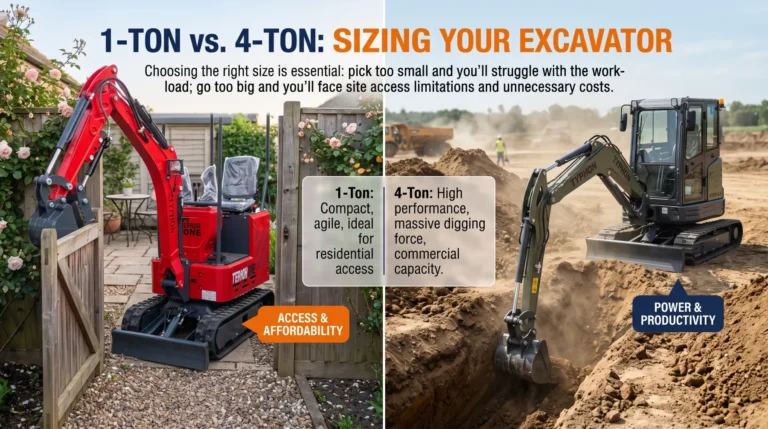
Compact excavators present a much more accessible and financially manageable entry point for ambitious contractors. You can acquire a premium compact machine equipped with advanced hydraulic systems and modern cab comforts for a fraction of the cost of its larger counterpart. This lower initial purchase price allows you to preserve your vital working capital for other critical business expenses, such as payroll, marketing, and material acquisition. Because the principal loan amount is drastically lower, you pay significantly less in total interest over time. This makes the compact machine a highly attractive option for growing businesses looking to scale their capabilities intelligently without overleveraging their hard-earned assets.
Evaluating Daily Operating Costs and Fuel Use
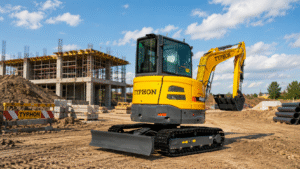
Fuel consumption represents one of the most substantial ongoing expenses for any active earthmoving operation. Massive engines generate incredible power, but they require massive amounts of diesel fuel to sustain that performance. Operating a full-size excavator throughout a heavy ten-hour shift can easily consume over a hundred gallons of expensive diesel. When you multiply that aggressive fuel burn across a lengthy commercial contract spanning several months, the operating costs become staggering. Additionally, large engines require constant top-offs of Diesel Exhaust Fluid to meet environmental regulations, adding yet another layer of daily consumable costs to your project budget.
In sharp contrast, compact machines feature highly efficient, smaller displacement engines that sip fuel while still delivering exceptional hydraulic breakout force. Advanced engineering ensures that these smaller engines maximize every single drop of fuel, keeping your daily overhead remarkably low. By choosing the smaller machine for appropriate tasks, you instantly slash your daily fuel expenses, driving a much higher percentage of your project revenue directly to your bottom line. Even during prolonged idle periods while waiting for dump trucks or materials, the fuel wasted by a compact engine is negligible compared to the massive financial drain of an idling full-size power plant.
Long-Term Maintenance and Repair Realities
You have to pay for repairs on heavy equipment, and the size of the machine directly affects how much the repairs will cost. Big excavators have huge steel undercarriages, huge hydraulic cylinders, and hundreds of gallons of special hydraulic fluid. When a big steel track needs to be replaced or a main hydraulic pump needs to be rebuilt, the costs of the parts and the skilled workers who do the work are very high. To service these giants, you often have to send heavy-duty mobile mechanic trucks to the job site, which costs a lot of money in travel costs and high hourly labor rates just to do routine maintenance.
Compact excavators utilize smaller, significantly less expensive components that drastically reduce your long-term maintenance burdens. Replacing a set of continuous rubber tracks costs a fraction of the price required to overhaul a heavy steel grouser system. Furthermore, the fluid capacities of a smaller machine are minimal. A hydraulic fluid flush or a routine engine oil change requires far fewer expensive industrial lubricants. Because the components are smaller and more manageable, your internal mechanics can often perform routine maintenance and wear part replacements quickly and safely inside your own shop, completely eliminating the need for expensive third-party service calls.
The Hidden Expense of Equipment Transportation
Moving heavy machinery between job sites directly impacts your overall profitability, representing a hidden cost that many contractors fail to calculate properly. Transporting a massive earthmover requires a dedicated logistical operation that drains your working capital. You must invest in or rent expensive commercial lowboy trailers, employ drivers holding specialized commercial licenses, and pay for oversized load permits from local municipalities. Every single time you dispatch a large machine, you incur heavy mobilization costs that you must either absorb or attempt to pass on to a potentially resistant client.
Compact excavators completely eliminate these heavy-haul expenses, providing a massive boost to your operational budget. Because you can tow a compact machine securely behind a standard heavy-duty pickup truck using a basic flatbed trailer, your mobilization costs plummet to near zero. You do not need commercial drivers, escort vehicles, or complex administrative permitting to move your equipment across town. You keep those massive transportation savings entirely within your business, allowing you to bid much more competitively on lucrative local projects while still retaining your target profit margins.
Jobsite Utilization and Preventing Idle Assets
One of the greatest threats to your company’s financial health is equipment underutilization. Purchasing a massive excavator for a fleet that primarily handles residential utility work or light urban landscaping represents a severe misallocation of funds. When a highly expensive machine sits idle in your storage yard because it is simply too large or too heavy for your current contracts, it actively drains your financial resources. You are forced to pay high monthly insurance premiums, storage costs, and loan payments on a depreciating asset that is generating absolutely zero revenue for your business.
Compact machines offer immense versatility across a remarkably wide variety of project types, serving as the ultimate safeguard against idle equipment. Their ability to work continuously in tight urban environments, delicate residential backyards, and restricted commercial alleys ensures they maintain an exceptionally high utilization rate. When a machine works every single day across different applications, it constantly generates billable hours, paying for itself rapidly. You maximize the return on your capital investment by ensuring your machinery remains active, relevant, and productive throughout the entire construction season.
Calculating True ROI Based on Your Contracts
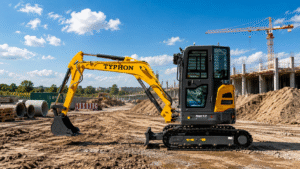
Maximizing your return on investment requires aligning your capital expenditures perfectly with your core contracting services. If your company specializes in heavy highway construction, massive commercial site preparation, or deep quarry mining, the immense production volume of a full-size excavator entirely justifies its high operational costs. When you must move thousands of yards of heavy earth every single day, the raw, undeniable size and power of a large machine provide the most efficient path to project completion and profitability.
However, if your business focuses primarily on urban infill development, complex residential renovations, or precise underground utility repairs, the compact excavator stands as the undisputed champion of financial return. Understanding the true mini vs large excavator cost dynamic proves that applying the right-sized tool to the task prevents massive financial waste. By avoiding the extreme purchase prices, heavy fuel consumption, and complex logistical nightmares associated with oversized equipment, you run a significantly leaner, more profitable operation.
Conclusion
Making highly informed, strategic equipment investments serves as the true cornerstone of a resilient, profitable contracting business. You simply cannot afford to guess when it comes to massive capital allocation and long-term financial commitments. By thoroughly evaluating the ownership and operating expenses associated with different machine classes, you empower your company to scale intelligently and sustainably.
We encourage you to review your upcoming project pipeline carefully and calculate your true historical operational costs. Look closely at how much you spend on fuel, maintenance, and transportation to determine exactly where your profits are going. Choose the heavy equipment that perfectly matches your daily workload, protect your hard-earned profit margins, and continue delivering the exceptional, reliable value your clients demand on every single project.